
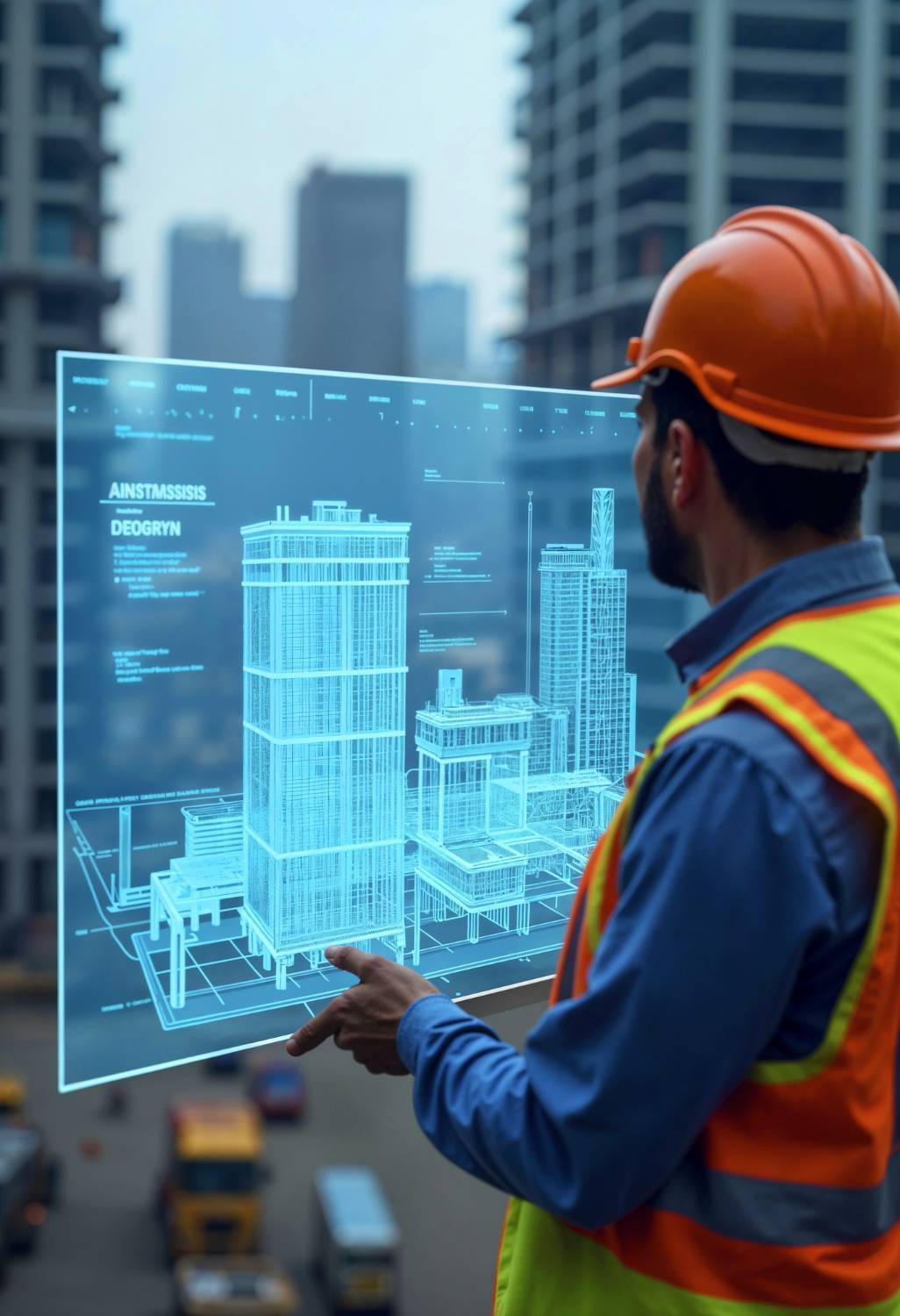
The Rise of ‘Self-Healing’ Buildings in India with Digital Twins: Key Highlights
- Digital Twins turn buildings into living systems: Unlike static BIM models, they continuously ingest real-time data to monitor, predict, and optimize building performance.
- Predictive maintenance reduces downtime: Early detection of faults in HVAC, lifts, pumps, and other equipment minimizes emergency repairs and extends asset life.
- Energy optimization without structural changes: Real-time adjustments to lighting, HVAC, and equipment sequencing can cut energy consumption by 15–20%, reducing operating costs significantly over decades.
- Supports ESG compliance and sustainability: Digital Twins enable verifiable reporting on energy, water, indoor air quality, and carbon metrics for investors, regulators, and tenants.
For years, structures in India have been considered dead assets. The moment they are built, they get turned over to facility managers with thick operation manuals and a rather simplistic philosophy, operate the systems until something breaks down, then fix them. It has been an expensive, inefficient, and environmentally destructive asset management policy, especially in a country where energy prices are volatile, water stress is chronic, and urban infrastructure is under unending pressure.
But that has slowly begun to change. Today, a quiet revolution is under way: new classes of technology are making buildings into living, learning systems-structures that can know how they're performing, predict failures, and optimize themselves continually at every level. The real heart of this transformation is the Digital Twin.
Often confused with Building Information Modelling, or BIM, Digital Twins go several steps further: not digital blueprints or 3D visualizations, they are live, virtual replicas of physical assets ingesting real-time data via sensors, meters, and control systems. In effect, they allow buildings to "feel", "think", and increasingly, to "self-heal".
In the context of India, where buiildngs needs to last 30–50 years and operational efficiency often matters more than upfront cost, Digital Twins are emerging as the missing brain of sustainable development.
A digital twin is a virtual replica of a physical object, system, or process that is dynamic and continuously updated with real-time data from sensors to reflect the performance, condition, and behavior of its real-world counterpart throughout its lifecycle. This facilitates simulation, monitoring, analysis, and optimization independent of the physical asset. Two-way data transfer helps businesses predict failures, test "what-if" scenarios, and make more data-driven decisions to improve efficiency and design.
How Digital Twins Differ from BIM?
BIM models are work snapshots frozen at the time of design and construction. They inform you about a ducts routing, the beams material, or the area of the rooms. After the completion of the project, the BIM is very rarely updated to reflect the real behavior of a building operating under normal conditions.
A Digital Twin, on the other hand, is an accurate virtual duplicate of a building, a bridge, a highway, or even a whole city. These models surpass the traditional Building Information Modeling (BIM) by embedding real, time data and analytics, making it possible for the models to continuously update and show the current condition of the physical asset. Effectively, they turn into a 'living' model that grows and changes with the construction or operational process.
All this data is then utilized by analytics software and AI models which in turn simulate the performance in real, time. It is like an operator getting a direct view of the facility in question, not just at the present moment but also being able to predict the future conditions based on what is happening and the reasons for that.
It is this ability to foresee events that makes the concept of a self healing building feasible.
Predictive Maintenance: Fixing Problems Before They Exist
In most Indian commercial buildings, the way of maintenance is pretty much the same: a chiller may abruptly stop working at peak summer, lifts may unexpectedly break down, or water pumps may get burnt due to overload. Such failures will inevitably cause dissatisfaction among tenants, the waste of energy, and the carrying out of costly emergency repairs.
Digital Twins change the situation completely.
When equipment performance is continuously monitored, a Digital Twin can detect latent faults like a slight increase in vibration, abnormal temperature changes, or the energy consumption curve being in demand. Such signs are usually detected weeks or months before the device stops working.For instance:
- When a cooling tower gradually loses its capacity, it can be serviced before it causes a breakdown at the peak load
- An air, handling unit that consumes more power than expected can be recalibrated before the energy bill goes up
- Pumps and motors can be changed during planned shutdowns instead of resorting to emergency outages
India is a country where most of the time the skilled maintenance workers are very hard to come by, so this change from reactive to predictive maintenance leads to the revolution of the whole system. It minimizes the down time of the devices, extends asset life, and cuts down on the long term operating costs these are the very results that developers and asset owners have to produce since the market has put such a pressure on them.
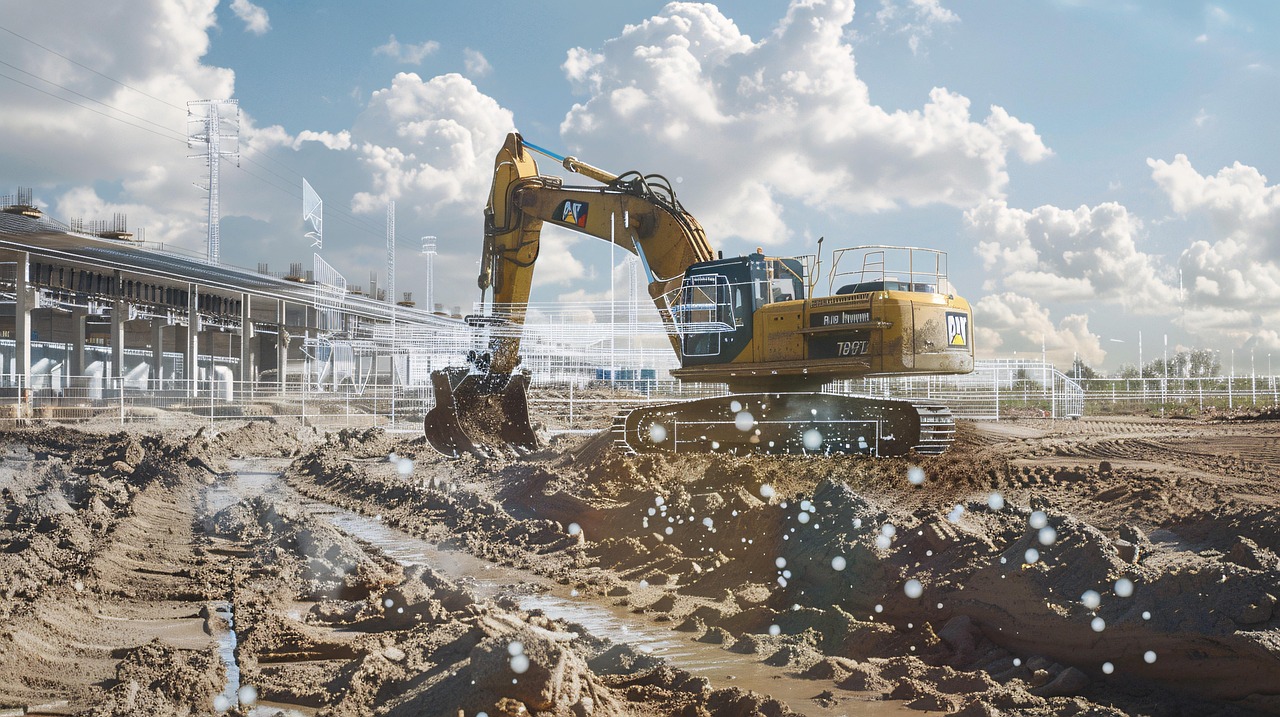
Energy Efficiency Without Structural Change
Compelling among the reasons for Digital Twins is the argument that they can be used for energy optimization alone. Building retrofits in an attempt to become more energy efficient, such as adding insulation, changing the facade, or modifying the layout, are costly and cause inconvenience. Once the owners decide that they have to make these upgrades, they delay them for an indefinite period of time.
Digital Twins provide a data, based solution to this problem.
Studies done by global consultancies such as Accenture and real estate advisors like JLL have pointed out that the use of Digital Twins in large commercial buildings can help reduce energy consumption by 15- 20% on an annual basis just by optimizing the operations. There is no need to make any major changes to the structure.
Explain the implementation of this?
- HVAC systems get adjusted in real time to the actual occupancy instead of following preset schedules
- Lighting switches according to the availability of the natural light and movement patterns,
- Using predictive algorithms which forecast the usage peaks, the peak load demand gets smoothed out,
- The sequencing of the equipment is done in such a way that systems run in their most efficient ranges
The energy cost is a major component of the operating expense for office towers, malls, hospitals, and data centers in India. Therefore, the above, mentioned savings will amount to staggering figures over the course of 20- 30, year lifecycles of such assets.
Key Advantages of Digital Twins
1. Predictive Maintenance and Reduced Downtime
2. Significant Energy and Cost Savings
3. Improved Asset Life and Capital Protection
4. Real-Time Decision Making
5. Stronger ESG and Regulatory Compliance
6. Scalability and Future Readiness
Major Applications of Digital Twins
1. Commercial Buildings and IT Parks
2. Hospitals and Healthcare Facilities
3. Data Centres and Mission-Critical Facilities
4. Residential Campuses and Townships
5. Industrial Parks and Manufacturing Zones
6. Smart Cities and Urban Infrastructure
Why This Matters for India?
First, for India, Digital Twins are not a luxury technology; they are a pragmatic response to:
- Increased energy consumption
- Water scarcity
- ESG pressure from investors and regulators
- The need for long-life, low-maintenance infrastructure
In fact, as the level of adoption increases, Digital Twins will become as vital to buildings as structural drawings once were.
Digital Twins as the Core of ESG Compliance
In India, where ESG scrutiny is tightening across real estate, infrastructure, and industrial assets, this capability is becoming less optional and more foundational.
Now, Environment, Social, and Governance (ESG) compliance has ceased to be aMarketing activity. This is because today investors, lenders, or the regulatory environment demand performance information, not sustainability intention.
Digital Twins offer exactly that.
Through their functioning as a centralized data layer, they make possible:
- Clear energy and carbon disclosure in line with international ESG guidelines
- Water Balance: An Important Component of Water Management
- Monitoring indoor air quality: correlating indoor building performance with occupant health outcomes
- Compliant data streams for auditors and financial institutions
For the developers looking to achieve green certification or ESG-linked loans, Digital Twin brings tremendous value. This is because the Digital Twin transforms the aspect of sustainability from an ‘at the point of certification’ activity to one where it is always verifiable.
The focus on ESG factors is also intensifying in India’s real estate, infrastructure, and industrial sectors. For Indian investors, this capability is becoming less optional and more essential.
The Smart City Dimension: Scaling Up from Buildings to Urban Systems
Though the discourse on Digital Twins is largely about buildings, the potential of Digital Twins is only realized in the context of the city.
Digital twin projects in new real estate ventures such as Amaravati and GIFT City offer a different strategy altogether. Rather than dealing with failure, a city is able to replicate its entire utility system digitally:
- Water distribution networks modelled to identify water leakages-susceptible areas beforehand when bursts happen
- Sewages & wastes are properly distributed in order not to overload & adulterate
- The energy grid operates in a balanced fashion dynamically as a function of demand forecasting
In a water-stricken nation such as the Indian scenario, the story assumes special importance. A Digital Twin not only helps in creating savings; it also protects limited resources and makes them avoidable.
Market Momentum: Why This Is a Long-Shelf Trend
The digital twin market in India is on the verge of extraordinary expansion owing to several factors such as the accelerated rate of digital adoption, the upgradation of cloud infrastructure, and the implementation of cutting edge technologies like IoT, artificial intelligence, and big data analytics.
According to the imarc report, the value of the digital twin market in India is likely to touch USD 1, 147.5 million in 2025 and, subsequently, is expected to reach USD 18, 016.9 million by 2034. The market is estimated to register a high growth rate at a CAGR of 35.79% during the period 2026, 2034. The biggest factor that is driving the Indian digital twin market is the uptick in the pace of industrialization in the country due to Industry 4.0.
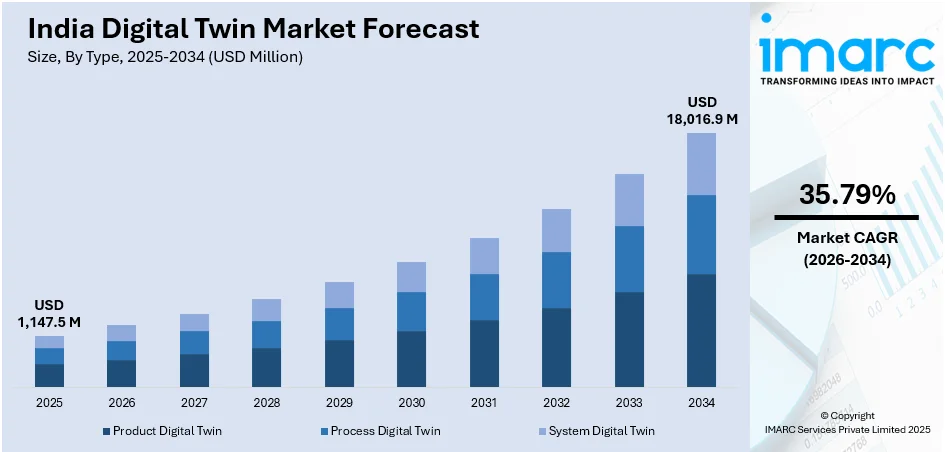
Organizations have been able to achieve these through digital twins which have been a game changer in enhancing efficiencies, maximizing the use of assets, and managing assets effectively.
The growing adoption of product, process, and system digital twins is enabling companies to better understand their operations, make efficient use of their resources, and enhance the accuracy of their decisions. Besides that, the combination of key technologies like 5G, AR/VR, and machine learning is making real time data processing and digital twin platform scalability more robust.
Since Indian companies are still placing automation, operational resilience, and cost efficiency at the top of their agendas, the digital twin market is being seen as a high, impact, long, term growth opportunity for technology vendors as well as solution developers.
A number of structural factors underpin this growth:
This has involved huge investments in infrastructure, not only in transport and commercial real estate but also in most urban amenities.
- Growing lifecycle cost awareness, particularly among institutional asset owners
- Stricter ESG and energy efficiency standards set by regulators and financiers
- Maturing IoT and cloud ecosystems combined with decreasing implementation costs
Unlike the point solutions that solve one problem at a time, Digital Twins create a foundational intelligence layer. Once in place, new use cases such as safety, resilience, carbon trading, AI-driven design feedback can be added incrementally. That is why Digital Twins can last as long as they do. They never go obsolete; they just evolve.
Challenges and the Indian Reality Check
While Digital Twins have shown great potential, they are not out, of, the box solutions. Indian deployments also come across some real challenges such as:
- Old infrastructure still not prepared for sensors
- Indirect and fragmented data sources
- Facilities management teams with skill deficits
- Upfront integration costs, especially for mid, sized developers
Nonetheless, these obstacles are gradually disappearing. Sensors are becoming cheaper, cloud platforms are more accessible, and a new wave of proptech and infrastructure tech companies is experimenting with solutions for Indian environments.
Importantly, the logic of the business case is changing from nice to have to financially unavoidable. Digital Twins become self- sufficient increasingly when energy savings, lesser downtime, and longer asset life are taken into account.
Way Forward
India faces a major problem with infrastructures but it is not simply a matter of building more. Rather it is about building smarter, producing assets that last longer and are more efficient. In this light, Digital Twins are a technology breakthrough. They make a room change from being just a space for living, into a smart room. They take the approach of fixing things after they break and replace it with the ability to anticipate problems. They make sustainability not merely a promise but a quantifiable result.
As India keeps on widening its urban and infrastructure network, the issue is no longer whether Digital Twins will get on board, but how fast they will be taken as a norm. The development of the self healing building is not a science fiction idea, it is a natural final step in the infrastructure strategy of India. In a country where every kilowatt saved and every litre of water preserved is important, the building with a brain may soon be the building that shapes the future.
Images- freepik.com, pixabay.com