Budget 2026–27: Commercial & Retail Real Estate Expectations Key Highlights
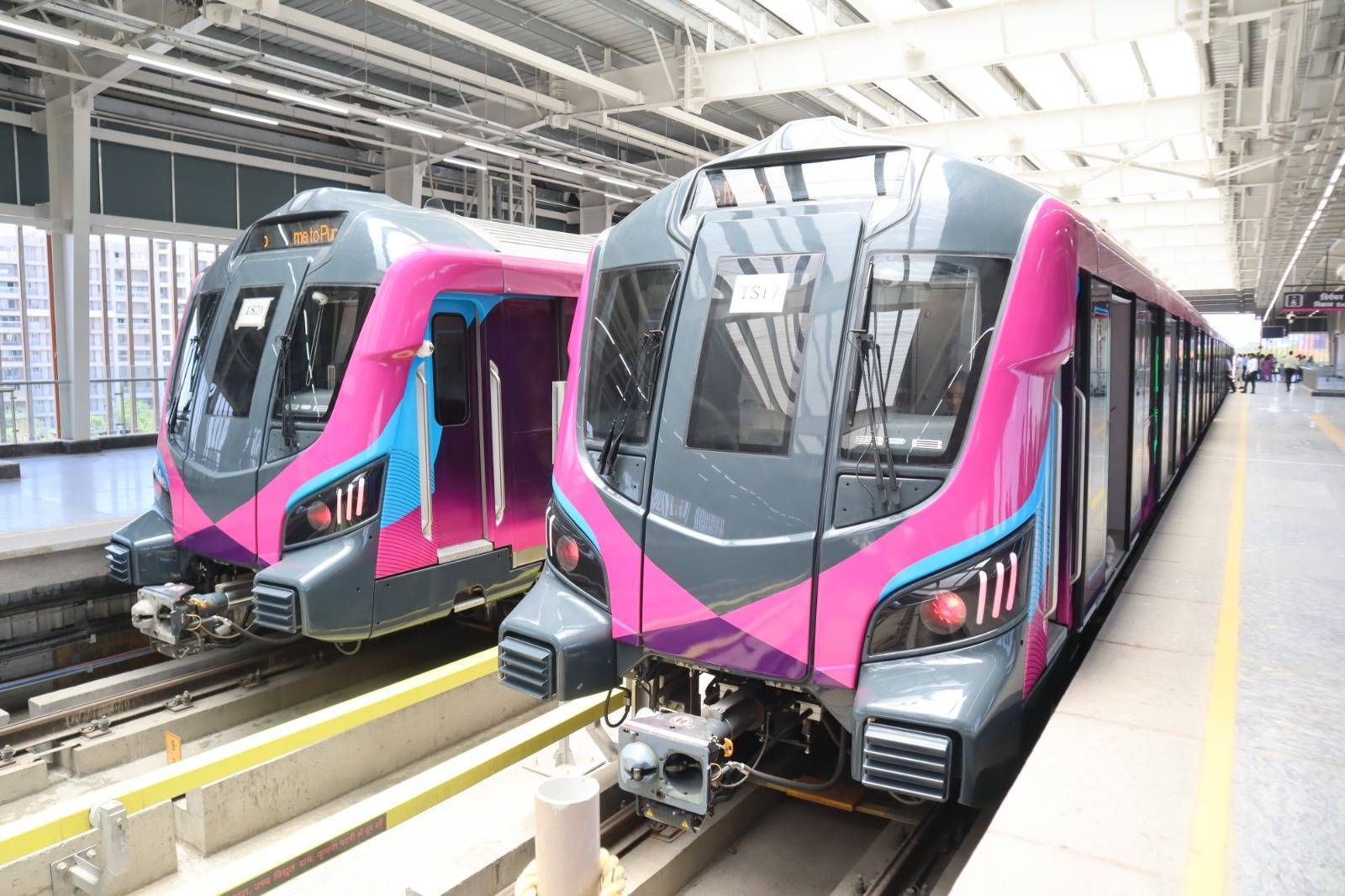
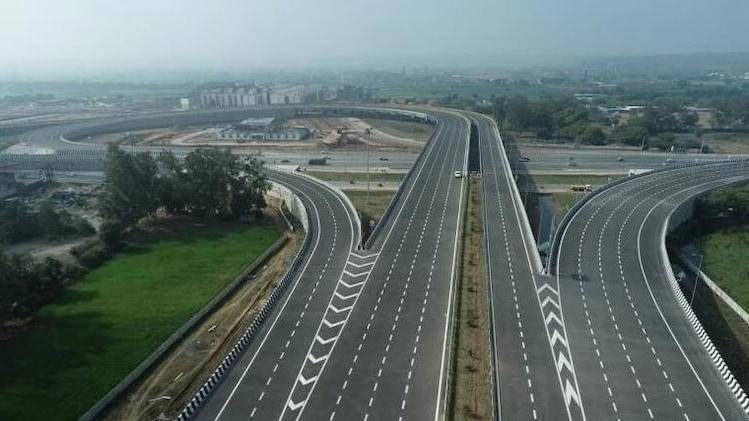
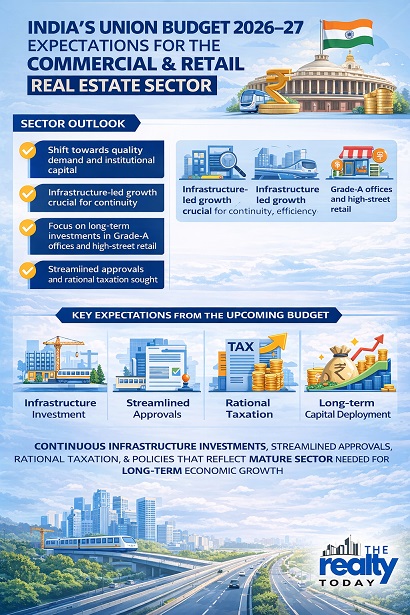
- Infrastructure continuity remains the core expectation, with metro, expressway and urban mobility projects driving asset value and demand.
- Tax and regulatory clarity, including GST rationalisation on commercial rentals, seen as vital for attracting patient domestic and global capital.
- Ease of doing business reforms such as single-window approvals and streamlined compliance to improve project feasibility.
- Shift toward quality-led growth as offices and retail assets prioritise experience, location efficiency and curated tenant mixes.
- Preference for structural reforms over short-term incentives, including industry status and long-term policy stability.
As India approaches the Union Budget 2026–27, commercial and retail real estate developers are anticipating the policy moment with measured optimism rather than expectations of short-term stimulus. Over the past few years, the sector has matured into a more organised, compliance-driven ecosystem, playing a critical role in employment generation, consumption growth, and urban transformation.
At present, the commercial realty segment is increasingly anchored in fundamentals—quality demand, institutional capital, and infrastructure-led value creation. With office leasing reaching its peak, organised retail gaining momentum through experience-led formats, and global investors seeking regulatory certainty, developers are looking to the upcoming budget for continuity in infrastructure spending, clarity in taxation and approvals, and reforms that support long-term capital deployment across Grade-A offices, high-street retail, and integrated commercial destinations. Developers are now looking to the upcoming budget for measures that can sustain momentum, enhance affordability, and attract long-term investment into the sector.
Echoing this outlook, Pankaj Jain, Founder and CMD, SPJ Group, highlights the need for a holistic policy approach that aligns infrastructure investment with stable real estate reforms. “The real estate sector is one of the significant contributors to the country’s economic progress, and we hope that it gets the due attention in the upcoming budget announcements. He says, “We expect the Union Budget 2026–27 to combine infrastructure investment with stable, forward-looking real estate policies, as this will not only enhance consumption and employment but also reinforce real estate’s role as a long-term economic growth engine.”
Jain points out that while supply has increased across asset classes in recent years, the next phase of growth, especially in retail, will be determined by quality rather than scale. “The retail sector is entering a phase where growth will not only be defined by supply volume but also by infrastructure quality and policy enablement,” he remarks. According to him, structural reforms such as granting industry status to real estate, streamlining approval processes, and creating a predictable operating environment can significantly strengthen the organised retail ecosystem and encourage institutional participation.
While commercial real estate often dominates public discourse around housing and affordability, the commercial real estate segment comprising offices and retail assets has been quietly recalibrating itself toward long-term sustainability. Industry experts observe that demand is now increasingly driven by occupier quality, location efficiency, and asset experience rather than speculative expansion.
Harinder Singh Hora, Founder Chairman, Reach Group, states, "The commercial real estate sector is witnessing strong momentum, powered by India’s expanding services economy and rapidly evolving consumption patterns. From Budget 2026, the industry is looking for reforms that improve ease of development, enhance affordability and encourage long-term capital deployment rather than short-term stimulus,” highlighting the momentum building within commercial real estate, driven by evolving consumption patterns and the expanding services economy.
He further adds, “A faster single-window clearance system, supported by GST clarity and rational taxation, would significantly improve project viability, cost efficiency and investor confidence across office and retail assets. At the same time, sustained infrastructure-led growth through investments in expressways, metro connectivity and urban mobility is essential, as improved connectivity directly drives footfall, occupier demand and asset performance. Together, these measures can accelerate the growth of India’s Grade-A offices, high-street retail and integrated commercial destinations, strengthening their ability to attract global and domestic capital while supporting employment and economic expansion."
These combined measures can accelerate the growth of Grade-A offices, high-street retail, and integrated commercial destinations while strengthening their employment and economic expansion. The retail real estate segment, meanwhile, continues to evolve in response to changing consumer behaviour and lifestyle preferences. Experience-led destinations, food and beverage hubs, and leisure-driven formats are increasingly shaping footfall quality and dwell time.
Sanchit Bhutani, Managing Director, Group 108, believes, “Commercial real estate is gradually settling into a more sustainable growth cycle, with both office and retail segments being driven by quality demand rather than volume-led expansion”. He notes that in retail, particularly, the shift toward experiential formats and curated tenant mixes has resulted in stronger and more consistent footfall, improving asset performance and investor confidence."
However, he states that policy intervention is still needed to improve operational efficiency and ease of doing business within the commercial real estate space. “From Budget 2026, the sector is looking for greater operational ease, including rationalisation of GST on commercial rentals, smoother compliance norms and incentives that support the modernisation of office and retail assets. He believes such measures can enhance asset viability while encouraging reinvestment into existing commercial stock.”
Harjeet Singh Sahni, CMD, Solitairriann Group, echoes this transition toward a more nuanced growth phase. He says, "The commercial property market is moving on to a more complex plane where quality and operational efficiencies are more valued than mere size. Supportive policies, which are able to facilitate greater access to funding, provide rationalisation of taxes on materials used in the development process, and ease the approvals process, would enable developers to invest in the next generation of quality assets. Classification of the sector as an industry would facilitate greater institutional participation, which would help the real estate adhere to further its participation in the country’s growth."
His perspective reinforces a broader industry belief that structural reforms rather than short-term incentives are essential to building resilient commercial assets that align with India’s long-term economic objectives.
Arjun Gehlot, Director, Ambience Mall, believes "Retail real estate has entered a more mature phase, driven by experience-led formats, food and leisure destinations, and higher-quality consumer footfall. As we approach Budget 2026, the sector expects policy support that recognises retail as a key enabler of urban consumption and employment.” also adds, “Enhancing tax incentives for individuals can directly improve consumers’ purchasing power, which in turn has a strong multiplier effect on retail demand and store-level performance. Alongside this, rationalisation of GST on commercial rentals, simplified compliance norms, and incentives for asset upgradation can significantly improve operational viability for organised retail developments.”
Gehlot also highlights the link between consumer purchasing power and retail performance, and he advocates the rationalisation of GST on commercial rentals, simplified compliance norms and incentives for asset upgradation. Lastly, he concludes, “Continued infrastructure investment remains equally critical, as connectivity and urban planning shape catchment growth and footfall quality."
Ajendra Singh, Vice-President, Sales and Marketing, Spectrum@Metro, notes, “Infrastructure remains the quiet engine behind real estate value creation. Every new transit corridor, logistics hub or civic upgrade reshapes how cities expand and where demand migrates. If borrowing costs soften further and approval workflows become more predictable, project feasibility improves without artificial incentives.”
He further adds that clarity in taxation and capital treatment will be instrumental in drawing long-term investors into the sector. “This will ensure greater certainty regarding taxation and the treatment of capital, which will help to attract patient capital not only to residential property development but also to commercial property development,” Singh explains.
Beyond infrastructure, the sector is also seeking recognition of real estate as a strategic economic pillar, one that influences multiple allied sectors such as cement, steel, logistics, retail, and financial services. With real estate contributing significantly to GDP and employment, stakeholders believe the upcoming budget presents an opportunity to reinforce the sector’s role in long-term economic development.
As global investors remain cautious amid geopolitical and economic uncertainty, India’s ability to attract long term domestic and institutional capital will depend on the regulatory clarity, tax stability and ease of doing business. Industry leaders agree that the predictable policies and infrastructure led growth can position Indian real estates as a resilient and future ready investment designation.
As Budget 2026–27 draws closer, the real estate sector’s expectations remain grounded and pragmatic. Rather than short-term stimulus, the industry is seeking continuous, steady infrastructure investment, streamlined approvals, rational taxation, and policies that reflect the sector’s evolving maturity. If the upcoming budget manages to deliver on these fronts, it could set the stage for a more stable, inclusive, and sustainable real estate ecosystem, one that supports India’s urban growth ambitions while reinforcing its long-term economic trajectory.
Image- freepik.com