

In Lucknow, the idea of home has always gone beyond four walls. It lived in airy courtyards that welcomed the morning light, in unhurried routines, and in a culture where neighbours were extensions of family. Today, however, this rhythm is increasingly challenged by denser development, shrinking green spaces and urban lifestyles. As the city expands and aspirations evolve, the meaning of home is undergoing a quiet yet significant shift. No longer seen merely as a functional space between workdays, homes are being reimagined as everyday sanctuaries; places that offer comfort, balance and a sense of retreat. For a new generation of homebuyers in Lucknow, the focus is moving away from simply buying a house to consciously investing in a lifestyle that restores what the modern city often takes away.
Lucknow’s relationship with leisure has always been deeply ingrained in its urban fabric. From the landscaped gardens and expansive baraadaris of the Nawabi era to evenings spent in intimate mehfils, indulgence here was never about excess, but about time, space and experience. That philosophy finds a contemporary echo in the rise of vacation-style townships, where living is thoughtfully curated rather than hurried. These developments reinterpret the city’s traditional appreciation for openness, comfort and social engagement through modern planning—wide green avenues, shared leisure spaces and a slower pace of life within secure, self-sustained environments. Rather than standing in contrast to Lucknow’s heritage, they draw from it, allowing the city’s legacy of refined living to quietly shape its next phase of urban growth.
Industry reports reveal that the average capital appreciation in Tier-II cities is pegged at 17.6% year-on-year, significantly higher than many metro markets. Cities like Lucknow (23–24%), Indore (22–23%), Jaipur (21%), and Bhubaneswar (19.5%) are often cited as outperforming metro peers in terms of property price gains. Meanwhile, metros like Delhi, Mumbai and Chennai are registering lower rates of appreciation in many comparisons. Therefore, buyers now value space, quality of life (less pollution, less crowding), and access to nature. This is prompting migration of demand away from large metro hubs to smaller cities with better environments and lower stress.
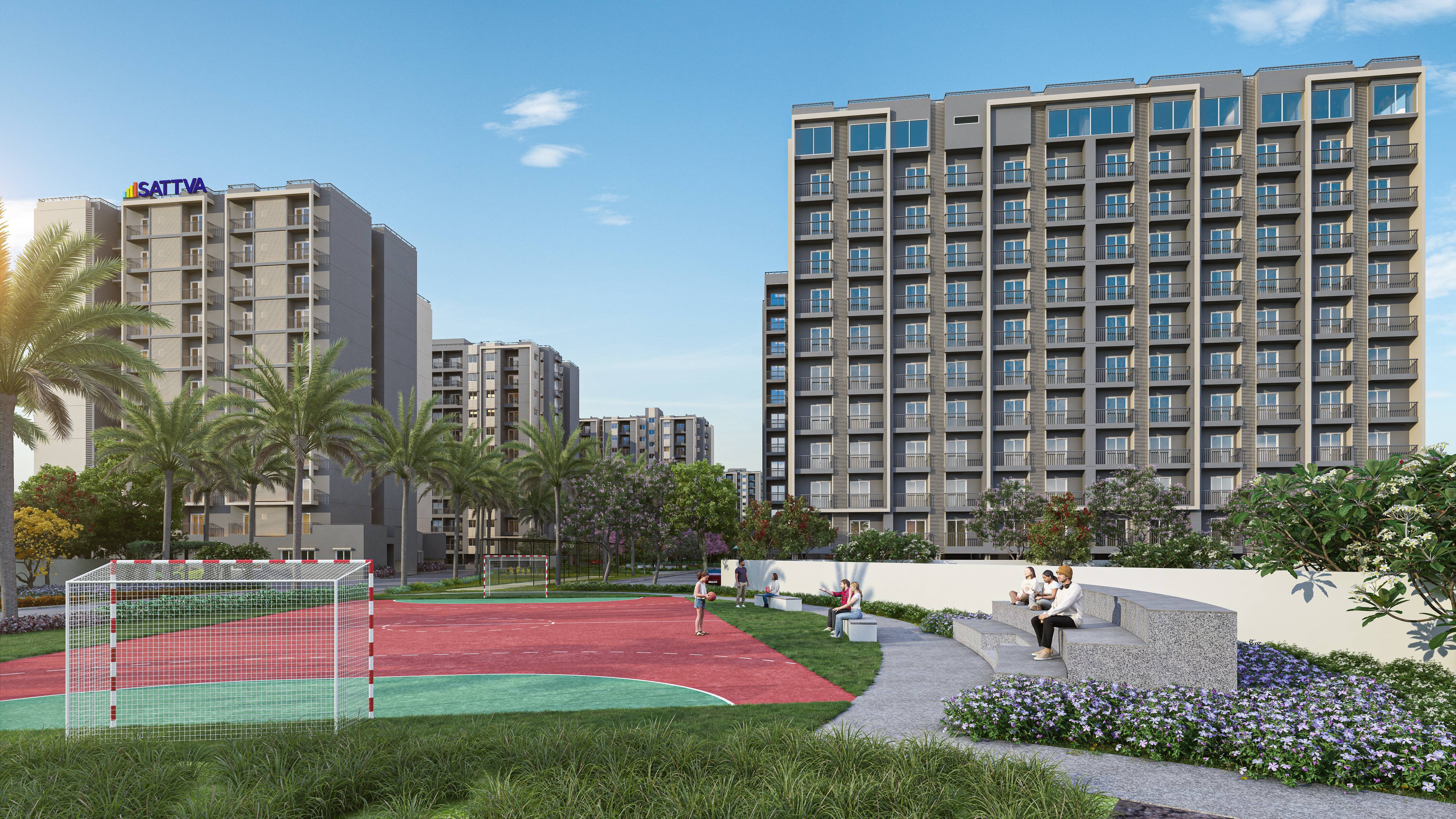
Moreover, changing family structures and evolving lifestyles are reshaping what modern households seek from their living spaces. With work-from-home blurring the boundaries between professional and personal life, and multi-generational families once again sharing common roofs, the demand for environments that support both productivity and wellbeing has grown sharply. Vacation-style townships respond to this shift by offering open play areas where children can grow amidst nature, walkable and calm landscapes that encourage active living for seniors, and thoughtfully designed leisure zones that allow working professionals to decompress without stepping out of the city. Together, these elements create a living experience that feels restorative rather than routine; where everyday life carries the rhythm of a short break, and home delivers the comfort of a micro-holiday, every single day.
Besides, the next phase of Lucknow’s urban story is unfolding beyond its traditional core, with growth corridors such as Gosaiganj, New Jail Road and their surrounding belts steadily emerging as focal points of planned development. Far from being peripheral extensions, these locations are gaining prominence due to their strategic connectivity, offering quicker access to the airport, proximity to established hospitals and education hubs, and the promise of upcoming retail and lifestyle destinations. This outward expansion reflects a conscious shift in the city’s planning priorities, where infrastructure leads development rather than follows it. Together, these markers point towards a more balanced and future-ready Lucknow, signalling structured urban evolution rather than unplanned sprawl.
Further, for an increasingly health-conscious homebuyer, true luxury now lies in invisible yet impactful infrastructure that supports everyday wellbeing. Features such as on-site sewage treatment plants, rainwater harvesting systems, low-density layouts and wider internal roads are gaining prominence for the tangible comfort they offer, from cleaner surroundings to reduced congestion and improved air quality. In these new-age townships, sustainability is not positioned as a symbolic gesture but as a long-term investment in quality of life.
As urban aspirations mature, the benchmarks of real estate value are undergoing a subtle yet decisive shift. Increasingly, “quality of life” is emerging as the new metric, outweighing traditional considerations of square footage or pin codes. When compared with conventional urban clusters, sprawling townships offer tangible advantages in cleaner air, generous open spaces and a heightened sense of security, alongside seamless access to wellness and leisure infrastructure. Equally significant is the emotional comfort they foster through planned community living, where social interaction is encouraged rather than incidental. In this context, such developments are no longer just shaping Lucknow’s growth story; they are quietly setting templates for how future Indian cities can balance scale, sustainability and human-centric living.
Thus, as Lucknow steps into its next phase of urban evolution, the city appears to be doing so without losing sight of its soul. Rather than distancing itself from its Nawabi past, it is reinterpreting that legacy through contemporary living formats that value space, grace and everyday comfort. In this blend of heritage and modernity lies Lucknow’s future: a city that continues to grow, yet allows life to slow down in meaningful ways.
Lucknow’s relationship with leisure has always been deeply ingrained in its urban fabric. From the landscaped gardens and expansive baraadaris of the Nawabi era to evenings spent in intimate mehfils, indulgence here was never about excess, but about time, space and experience. That philosophy finds a contemporary echo in the rise of vacation-style townships, where living is thoughtfully curated rather than hurried. These developments reinterpret the city’s traditional appreciation for openness, comfort and social engagement through modern planning—wide green avenues, shared leisure spaces and a slower pace of life within secure, self-sustained environments. Rather than standing in contrast to Lucknow’s heritage, they draw from it, allowing the city’s legacy of refined living to quietly shape its next phase of urban growth.
Industry reports reveal that the average capital appreciation in Tier-II cities is pegged at 17.6% year-on-year, significantly higher than many metro markets. Cities like Lucknow (23–24%), Indore (22–23%), Jaipur (21%), and Bhubaneswar (19.5%) are often cited as outperforming metro peers in terms of property price gains. Meanwhile, metros like Delhi, Mumbai and Chennai are registering lower rates of appreciation in many comparisons. Therefore, buyers now value space, quality of life (less pollution, less crowding), and access to nature. This is prompting migration of demand away from large metro hubs to smaller cities with better environments and lower stress.
Moreover, changing family structures and evolving lifestyles are reshaping what modern households seek from their living spaces. With work-from-home blurring the boundaries between professional and personal life, and multi-generational families once again sharing common roofs, the demand for environments that support both productivity and wellbeing has grown sharply. Vacation-style townships respond to this shift by offering open play areas where children can grow amidst nature, walkable and calm landscapes that encourage active living for seniors, and thoughtfully designed leisure zones that allow working professionals to decompress without stepping out of the city. Together, these elements create a living experience that feels restorative rather than routine; where everyday life carries the rhythm of a short break, and home delivers the comfort of a micro-holiday, every single day.
Besides, the next phase of Lucknow’s urban story is unfolding beyond its traditional core, with growth corridors such as Gosaiganj, New Jail Road and their surrounding belts steadily emerging as focal points of planned development. Far from being peripheral extensions, these locations are gaining prominence due to their strategic connectivity, offering quicker access to the airport, proximity to established hospitals and education hubs, and the promise of upcoming retail and lifestyle destinations. This outward expansion reflects a conscious shift in the city’s planning priorities, where infrastructure leads development rather than follows it. Together, these markers point towards a more balanced and future-ready Lucknow, signalling structured urban evolution rather than unplanned sprawl.
Further, for an increasingly health-conscious homebuyer, true luxury now lies in invisible yet impactful infrastructure that supports everyday wellbeing. Features such as on-site sewage treatment plants, rainwater harvesting systems, low-density layouts and wider internal roads are gaining prominence for the tangible comfort they offer, from cleaner surroundings to reduced congestion and improved air quality. In these new-age townships, sustainability is not positioned as a symbolic gesture but as a long-term investment in quality of life.
As urban aspirations mature, the benchmarks of real estate value are undergoing a subtle yet decisive shift. Increasingly, “quality of life” is emerging as the new metric, outweighing traditional considerations of square footage or pin codes. When compared with conventional urban clusters, sprawling townships offer tangible advantages in cleaner air, generous open spaces and a heightened sense of security, alongside seamless access to wellness and leisure infrastructure. Equally significant is the emotional comfort they foster through planned community living, where social interaction is encouraged rather than incidental. In this context, such developments are no longer just shaping Lucknow’s growth story; they are quietly setting templates for how future Indian cities can balance scale, sustainability and human-centric living.
Thus, as Lucknow steps into its next phase of urban evolution, the city appears to be doing so without losing sight of its soul. Rather than distancing itself from its Nawabi past, it is reinterpreting that legacy through contemporary living formats that value space, grace and everyday comfort. In this blend of heritage and modernity lies Lucknow’s future: a city that continues to grow, yet allows life to slow down in meaningful ways.



.png)