

Biophilic, Climate-Responsive Studio in Bengaluru: Key Highlights
- The 2,500 sq ft AD Studio 9 workspace in RR Nagar, Bengaluru, uses daylight, natural ventilation, and passive cooling to stay cooler than outdoors, eliminating reliance on mechanical air conditioning.
- The central open workspace encourages organic collaboration, while carefully positioned upper windows and spatial planning ensure privacy, comfort, and visual connectivity.
- Use of exposed brick, reclaimed wood accents, natural flooring, and muted wall treatments improves thermal comfort, reduces glare, and strengthens the connection to nature.
- Paludarium-inspired living element in the meeting room enhances air quality and sensory experience
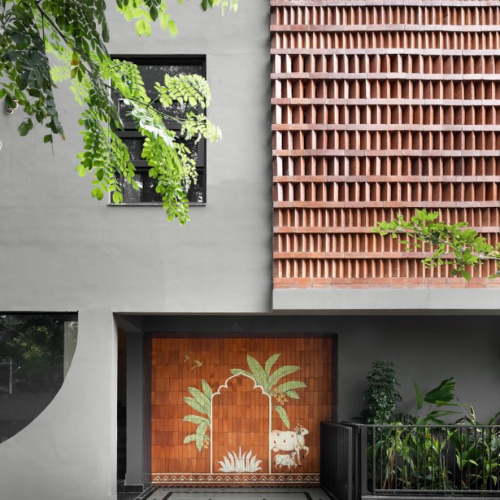
- South-facing living wall with terracotta, vegetation, and evaporative cooling supports privacy, biodiversity, and climate adaptation
Today urban workspaces are often completely sealed off from their surroundings and thus, highly dependent on artificial lighting, mechanical cooling and a rigid layout prioritizing efficiency over experience. The 2, 500 sq ft architectural studio in RR Nagar, Bengaluru, designed by AD Studio 9, is a well considered alternative to that. The studio, which was designed as a biophilic, climate, responsive environment, is even a demonstration of how architecture can be naturally comfortable while fostering creativity, collaboration and well- being.
Sustainability at core
The studio, which is located on the first floor of a bare, shell structure, has the uncommon urban site advantage of a dense green canopy surrounding the building. Instead of separating the interior from this environment, the design point of the project is engaging with it. Daylight, natural ventilation and views of the greenery are part of the spatial planning, so the studio can be cooler than the outside even on the hottest summer days, without using air conditioning. The studio is the result of a deliberate decision to move away from energy intensive solutions to passive design strategies based on the climate and the location.
The layout finds a perfect mix of openness and privacy. The working area is flowing and visually connected, but it is never packed or fully exposed. The upper windows are modelled to promote cross, ventilation and gentle daylight whilst also considering the privacy concerns that the neighbouring buildings bring in. Therefore, the studio is designed as an airy and quiet place where one may work for hours without getting tired.
Areas for flow, interaction, and focus
The central area of the studio is an open workspace that encourages organic collaboration. The designers are always in each other’s sight, and this encourages natural conversations and idea-sharing. The design also encourages ease and grounding through the material choice:
- Dull wall treatments and natural flooring materials that minimize glare and heat
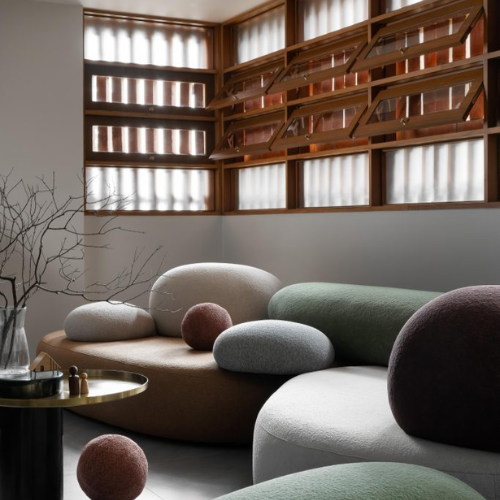
- Exposed brick walls that add texture and improve thermal comfort
- Wood accents salvaged from reclaimed wood that enhance the connection with nature
Simple workstations and conference tables with hidden services that provide visual clarity and a clean environment. Storage is also seamlessly integrated into walls and functional areas to promote ease of circulation and maintenance.
The reception area that welcomes visitors as they enter the studio is a carefully designed space that introduces the entire space. The custom-designed foyer table made from local materials introduces the space, while the sculptural sofa with soft, organic shapes reflects the surrounding environment.
Nature being a conscious design factor
Next to the main room, a meeting room flooded with daylight demonstrates the biophilic approach of the studio. At its heart, there is a Paludarium, inspired piecea mix of art, architecture and living landscape.
Besides being a visual centrepiece, this work improves the air quality and the senses through gentle movements and sounds.
Various design problems have been creatively solved in the space. The low beams, for example, were turned into a sculptured, curved ceiling that, visually, allows more height and openness. A wall of a dedicated workstation shows the firm's sketches, drawings, and elevations, telling the story of the design journey.
Private cabins with different personalities
Outside the common areas, two private cabins for the company partners are designed in such a way that each reflects a distinct character and work, oriented mindset.
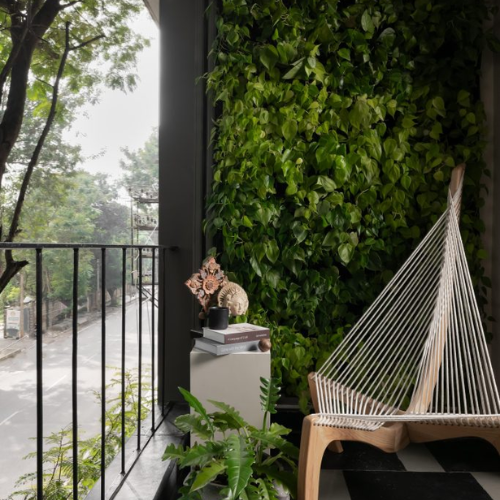
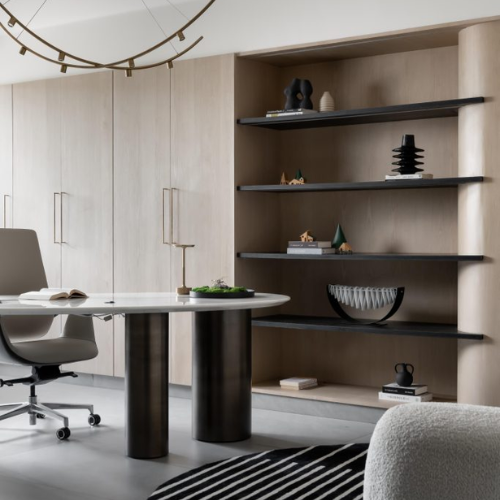
- The first cabin is really the embodiment of openness and warmth where the architectu re, nature dialogue is almost seamless due to the use of wood, marble, and the curves of the forms. East window and the balcony paved with Kota stone floor extend the work area to the outdoors, where there is more greenery.
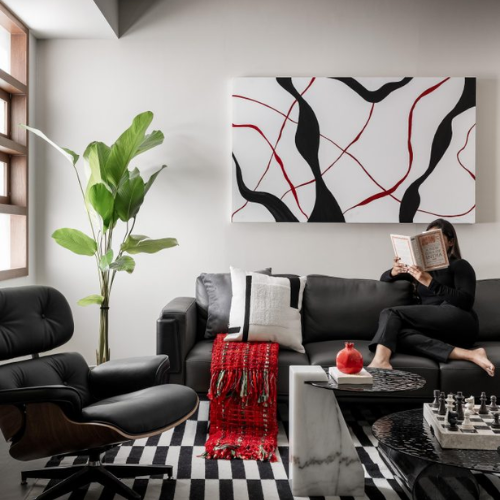
- The second cabin has the characteristics of being more closed and self reflective. A monochrome color scheme is broken up by the use of bright red elements that characterize a bold, lively and unique personality. The combination of a high level of customization in the furniture, various textures at the different levels and the soft curves of the ceiling has resulted in a sophisticated yet comfortable setting.
The premises include various ways of incorporating nature to the designs, which have been demonstrated through the different interpretations of biophilic design.
Biophilic design: Everyday spaces elevated through biophilia
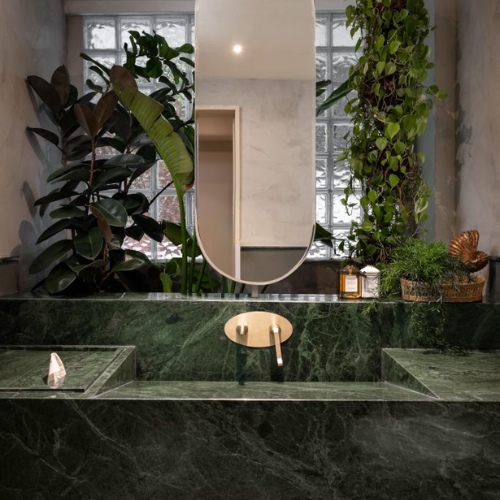
The design is always an area where thoughtfulness is shown, even in the functional areas. The pantry is no longer the back of the house area but a place where people can take an informal retreat, enjoy the view of the plants and momentarily get away. The combination of exposed brick walls, natural oak shutters, and green marble worktops sourced from local material suppliers is what makes the warm, inviting atmosphere. A raised ledge lets in sunlight, so it's great for informal meetings and breaks during the day.
The south, facing elevation is one of the main parts of climate adaptability. It has been designed as a living wall which comprises:
- An exposed brick screen to filter sunlight and prevent heat gain
- Dense vegetation to improve privacy and biodiversity
- Terracotta tiles cooled by drip irrigation, using evaporative cooling
- A living wall that supports birds, butterflies, and air quality improvement
Ultimately, the studio stands as a living example of how biophilic and climate-responsive design can redefine the modern workplace. By integrating passive cooling strategies, natural materials and immersive spatial experiences, the studio consistently remains cooler than its surroundings, without mechanical dependence. More than an office, it is an ecosystem that supports creativity, collaboration and well-being. It reinforces the idea that when architecture is designed in harmony with nature, it does more than function efficiently, it elevates the human experience.




.png)