
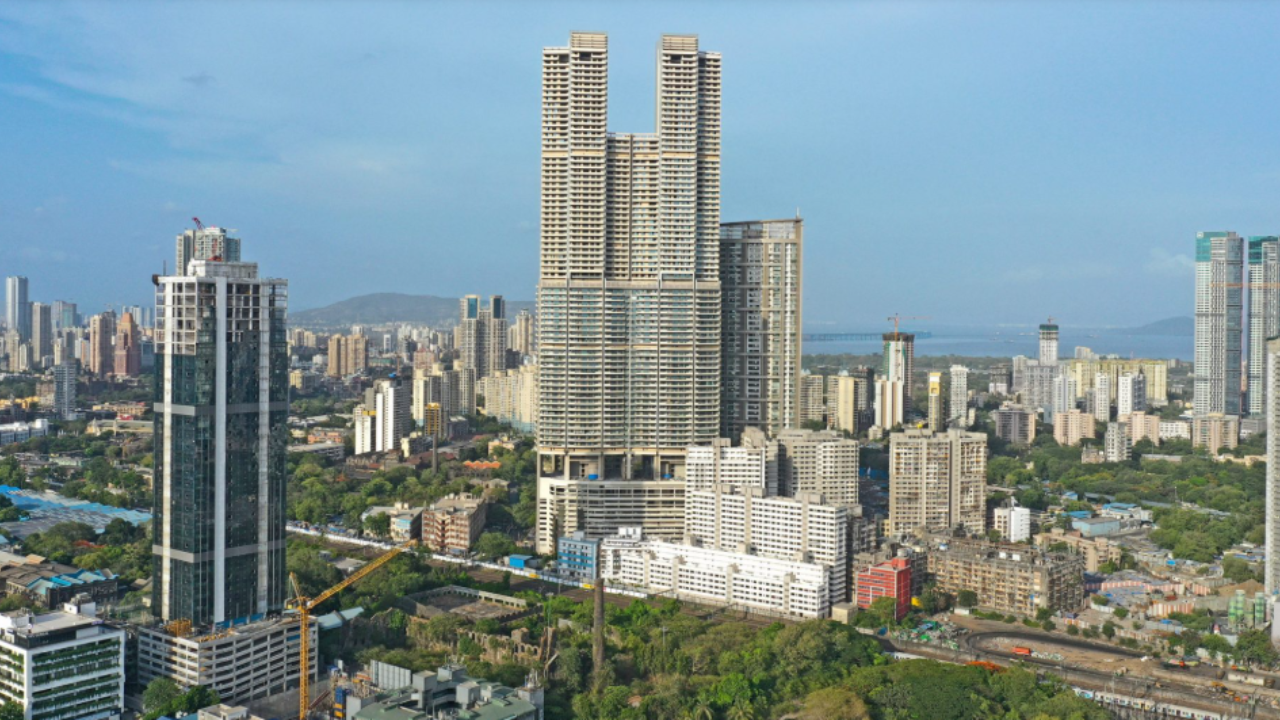
Minerva Tower: Key Highlights of India’s Completed Tallest Skyscraper
- Architect: Designed by Hafeez Contractor, Mumbai’s iconic high-rise designer.
- Urban Redevelopment Origin: Built on a 2.6-hectare slum redevelopment site; residents rehoused in 10 formal buildings with schools, shops, and community centers.
- Height Driven by Land Scarcity: Vertical expansion due to limited 6,000 sqm developable land and FSI regulations, not aesthetic ambition.
- Distinctive Dual-Tower Design: Linked by a common podium, curved decks, deeply set balconies, narrow profile for visual lightness and liveability.
- Material & Structural Strategy: Reinforced concrete for Mumbai’s climate and structural conditions.
- Premium Residential Mix: 362 units, mostly 3–4 bedrooms, duplex penthouses, and exclusive 5-bedroom top-floor homes.
- Regulatory-Driven Design Evolution: Mid-construction changes in FSI rules led to tapered tower, smaller floor plates, and lift core repositioning.
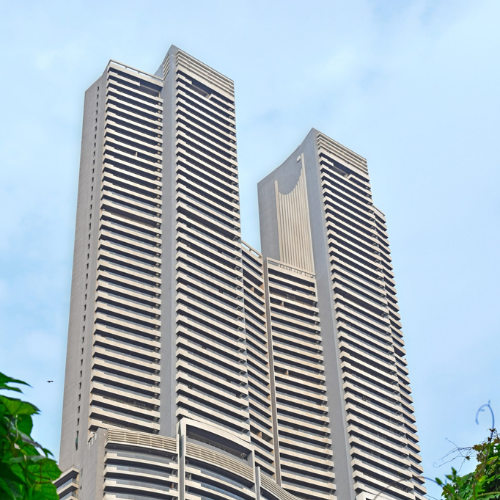
Mumbai has further established itself as the vertical growth capital of India with the construction of Minerva Tower, the tallest completed building in India. The 91, storey dual, tower residential development has been designed by Architect Hafeez Contractor and is a major landmark in the development of high-rise living in India.
Minerva Tower, being one of the only two supertall buildings in the country, has crossed the 300 meter mark that is used to point out global supertall buildings.
Although the Palais Royale project in Mumbai has been topped out at a higher height, it is still under construction, so Minerva Tower is the tallest building currently occupied.
Supertall Development: A Close Connection to Urban Redevelopment
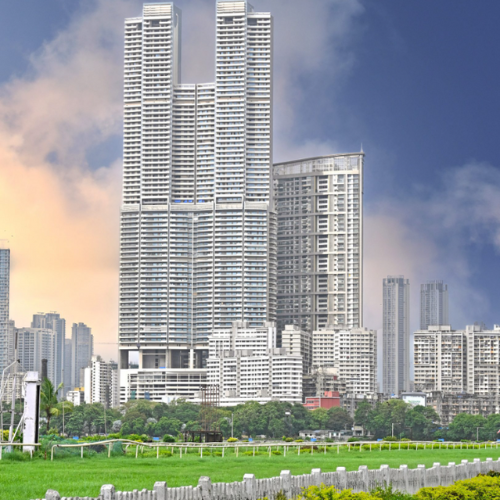
While for many global skyscrapers the main drives are prestige or competition, Minerva Tower can be considered an exception as it was born out of a slum redevelopment project covering a 2.6, hectare site in South Mumbai. The project complied with the Mumbai Slum Redevelopment Policy which stipulates that informal settlement residents must be permanently housed before private developers can be given rights.
Thus, the old residents were housed in 10 formal high rise buildings along with essential infrastructures like schools, shops and community centers. Meeting these requirements left only a small land of approximately 6, 000 square meters for commercial residential development, which in turn, determined the tower's vertical shape.
Height as a Reaction to Regulation and Land Scarcity
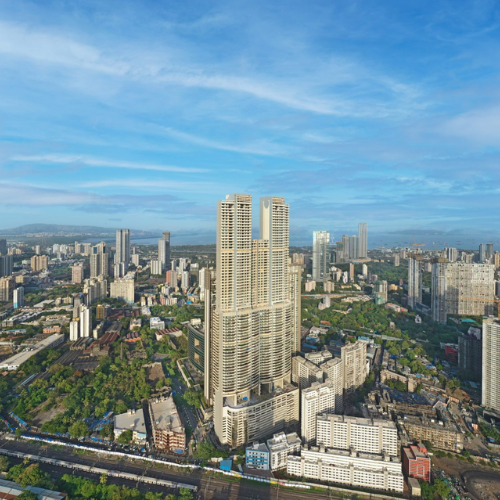
To quote Architect Hafeez Contractor, Minerva Tower's crazy height was never their target but rather a result of regulatory and economic realities. Mumbai is a city where developable land is scarce and mostly reached via redevelopment schemes. In such scenarios, the only option to the vertical expansion is the call of the hour, not the aesthetic one.
The height of the tower most likely represents the necessity to squeeze in the maximum permissible floor area on the limited site while also fulfilling the social housing obligations and the granting of the higher, density premium. It is a case in point that typical Indian high- rise developments rely more on policy compliance and responding to the need for land efficiency than on architectural show-off.
Distinctive Dual-Tower Design and Structural Strategy
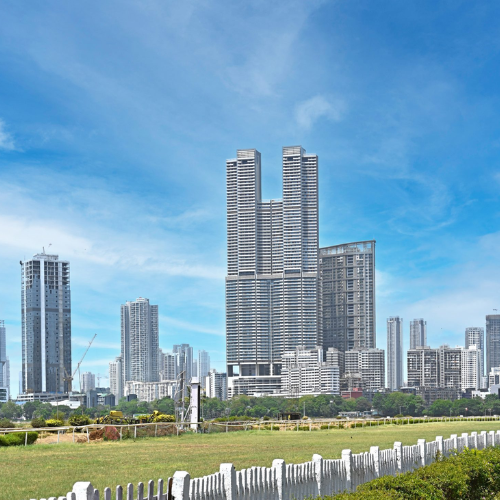
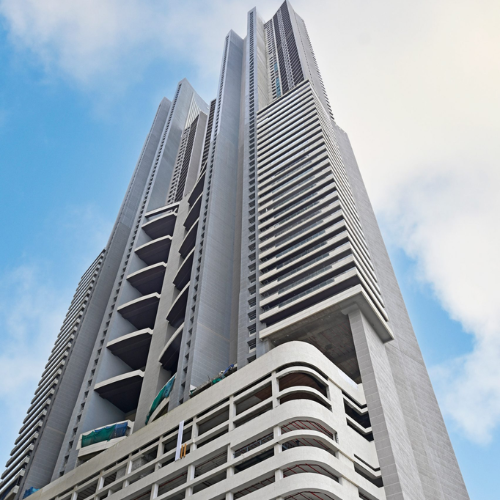
Minerva Tower features a distinctive dual, tower design that is linked by a common podium and continuous curved decks. Balconies that are set back deeply, along with a narrow vertical profile, visually reduce the bulk of the building and at the same time, increase the liveability aspect. The main construction material used for the building is reinforced concrete, which is quite suitable for the climatic and structural conditions in Mumbai.
Consideration was given to the apartment layouts so that they would have unobstructed views of the outside. Thus homes look out over the Mahalaxmi Racecourse and the Arabian Sea. This demand was instrumental in determining the shape of the tower as a slender tower with a highly vertical expression.
Residential Mix and Lifestyle Amenities
The project is made up of 362 apartments that are marketable, and the emphasis has predominantly been on large configurations. Most of the homes are three, and four, bedroom units, while duplex penthouses and exclusive five, bedroom homes at the top floors complete the offer.
A multi, level podium, which houses the parking facilities and also sports, fitness, and leisure amenities of an urban lifestyle designed to be upscale, together form the base of the towers. Incorporating the amenities into the podium enables the residential towers above to be visually light and functionally efficient.
Regulatory Changes and Mid-Construction Design Evolution
One of the major facets of the project was a design evolution in the middle of construction due to changes in building regulations in Mumbai.
Previous development norms allowed for large decks and common areas to be exempt from Floor Space Index (FSI) calculations thereby permitting very large floor plates up to Level 51.
The later changes in regulations repealed these privileges and hence the upper floors got reconfigured with smaller floor plates, less number of apartments per floor and the lift cores have been brought closer together. This change has led to the tower's final tapered shape, which has made its slender profile more prominent on the skyline.
Minerva Tower is a mirror of India's extremely practical attitude to skyscrapers, where the height is more likely to be a consequence of urban limitations rather than a quest for worldwide fame. In Mumbai, residential towers vertically are often a result of redevelopment models, which allow a mix of private development and social housing provision. As the tallest building in India, Minerva Tower is not only an architectural landmark, but also a story of how vertical growth of the dense cities can be a response to regulation, social, and economic factors.





.png)