Self-cleaning coatings are an important advancement in modern construction materials, especially for smart and sustainable buildings. In dense urban environments, building surfaces are constantly exposed to pollutants, dust, rain stains, algae, and microbial growth. These factors not only affect the aesthetic appearance of buildings but also increase maintenance requirements and operational costs.
To address these issues, the construction industry has developed self-cleaning coatings, which are thin protective layers applied to building surfaces that allow them to remove dirt and contaminants automatically. These coatings work through advanced technologies such as photocatalytic reactions, hydrophobic and superhydrophobic surfaces, and nanotechnology-based materials.
Concept of Self-Cleaning Coatings
Self-cleaning coatings are functional surface layers applied to construction materials that allow the surface to remain clean with minimal human intervention. These coatings are engineered to prevent dirt adhesion or to break down contaminants when exposed to environmental factors such as sunlight and rain.
The main mechanisms used in self-cleaning coatings include:
• Photocatalytic coatings that break down organic contaminants
• Hydrophobic coatings that repel water and dirt
• Superhydrophobic coatings that mimic natural surfaces such as lotus leaves
These coatings create surfaces where dust, oils, pollutants, and microorganisms cannot easily accumulate.
Working Principle of Self-Cleaning Coatings
1. Photocatalytic Coatings
Photocatalytic coatings are among the most widely used self-cleaning technologies in modern construction.
These coatings typically contain titanium dioxide (TiO₂) nanoparticles. When exposed to ultraviolet light from sunlight, TiO₂ triggers a chemical reaction that produces highly reactive radicals. These radicals break down organic pollutants such as oils, dust particles, bacteria, and algae into harmless substances.
At the same time, the coating becomes super-hydrophilic, meaning water spreads evenly across the surface instead of forming droplets. Rainwater then washes away the decomposed contaminants.
This process results in continuous surface cleaning without manual intervention.
2. Hydrophobic and Superhydrophobic Coatings
Hydrophobic coatings create water-repellent surfaces. Instead of spreading across the surface, water forms droplets and rolls off.
Superhydrophobic coatings enhance this effect further by creating micro- and nano-structured surfaces that minimize water adhesion.
When water droplets roll across the surface, they collect dust and dirt particles and carry them away. This phenomenon is known as the “lotus effect.”
Such coatings are commonly made using:
• Nano-silica particles
• Fluoropolymer compounds
• Silicone-based resins
These coatings are widely used on glass facades, metal cladding, painted surfaces, and solar panels.
Types of Self-Cleaning Coatings in Construction
1. Self-Cleaning Glass Coatings
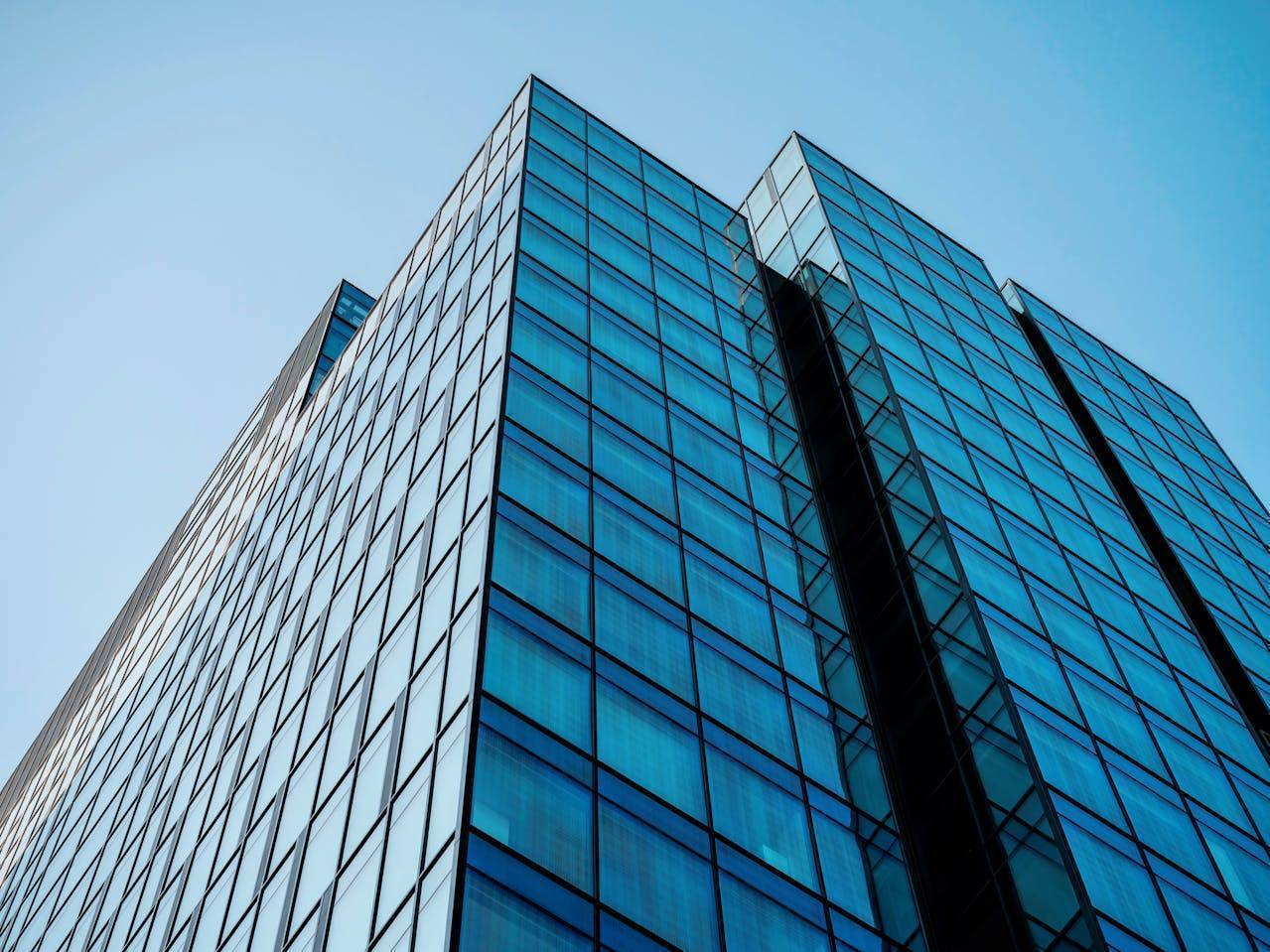
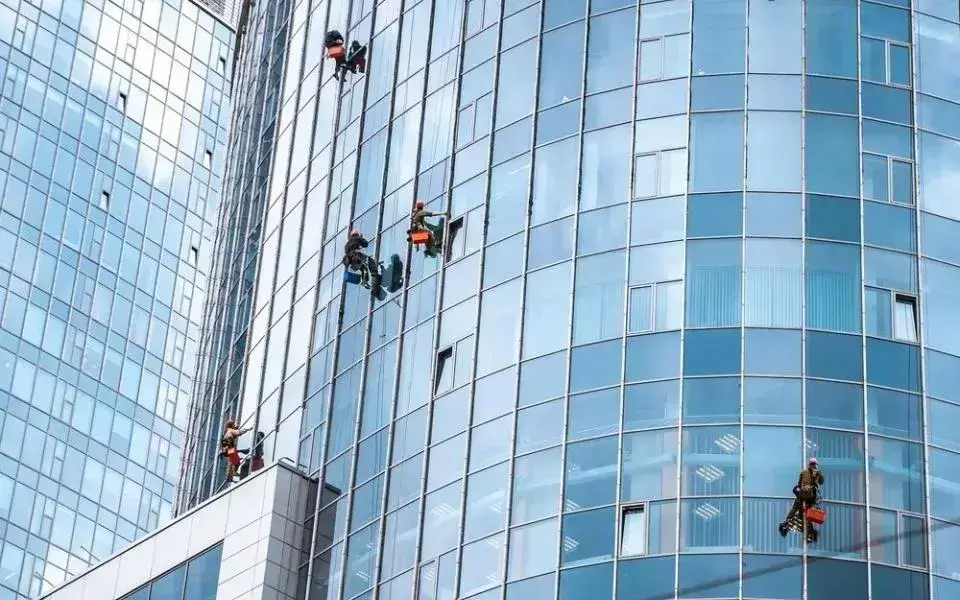
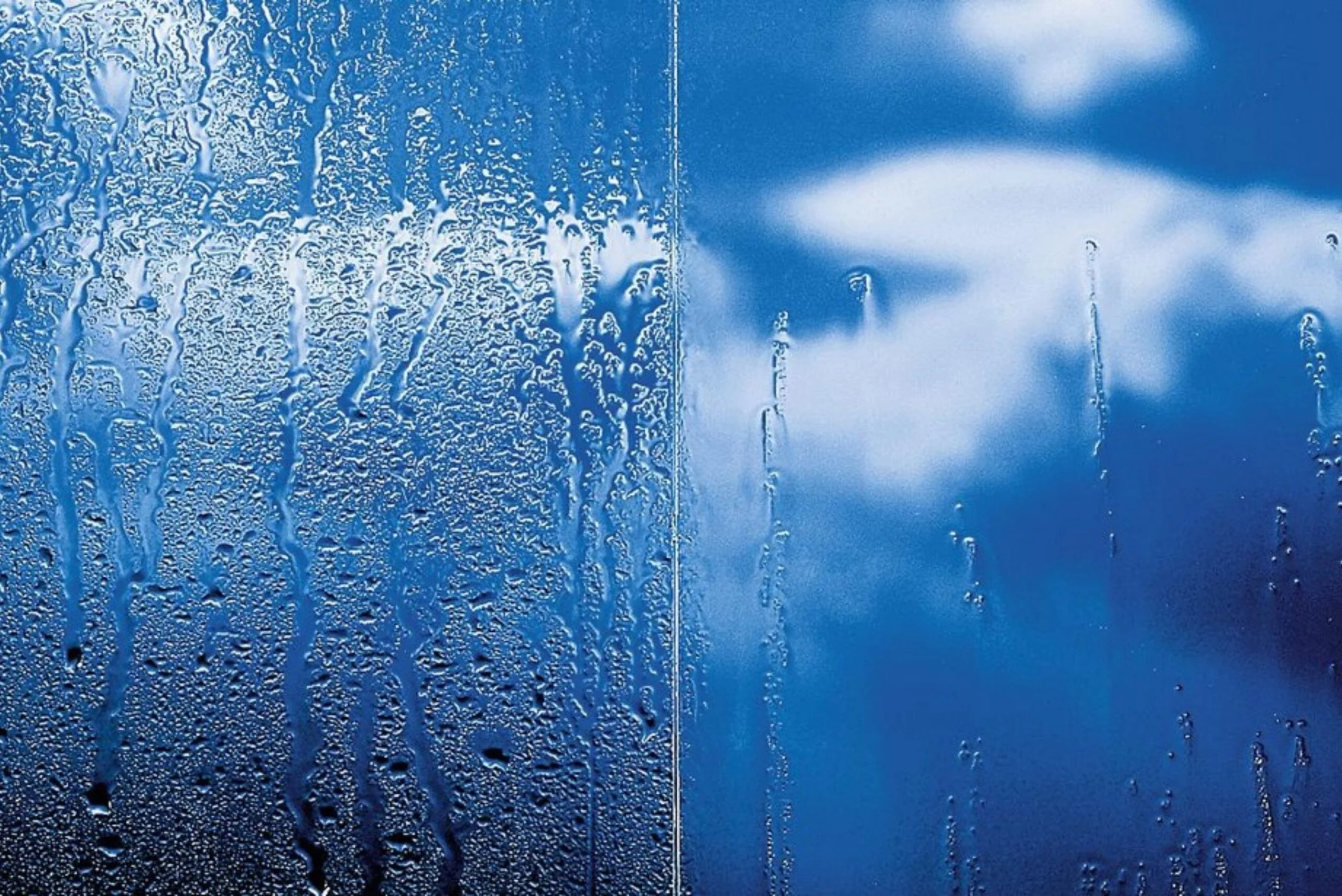
Self-cleaning glass coatings are widely used in modern high-rise buildings, commercial complexes, and large infrastructure projects with extensive glass façades. These coatings are typically based on photocatalytic materials such as titanium dioxide (TiO₂). When exposed to sunlight, the coating breaks down organic dirt and pollutants deposited on the glass surface. At the same time, the surface becomes hydrophilic, allowing rainwater to spread evenly and wash away the loosened particles. This technology significantly reduces the need for frequent manual cleaning, which is particularly beneficial for tall buildings where façade maintenance is expensive and difficult.
2. Self-Cleaning Wall Coatings
Self-cleaning wall coatings are applied to exterior building surfaces such as concrete, plaster, brick, and stone facades. These coatings contain nanomaterials or photocatalytic compounds that prevent dirt adhesion and reduce biological growth such as algae, mold, and fungi. In urban environments where buildings are constantly exposed to air pollution and dust, these coatings help maintain the original color and appearance of building walls. They also improve the durability of surfaces by protecting them from environmental degradation and reducing the frequency of repainting or cleaning.
3. Self-Cleaning Roof Coatings
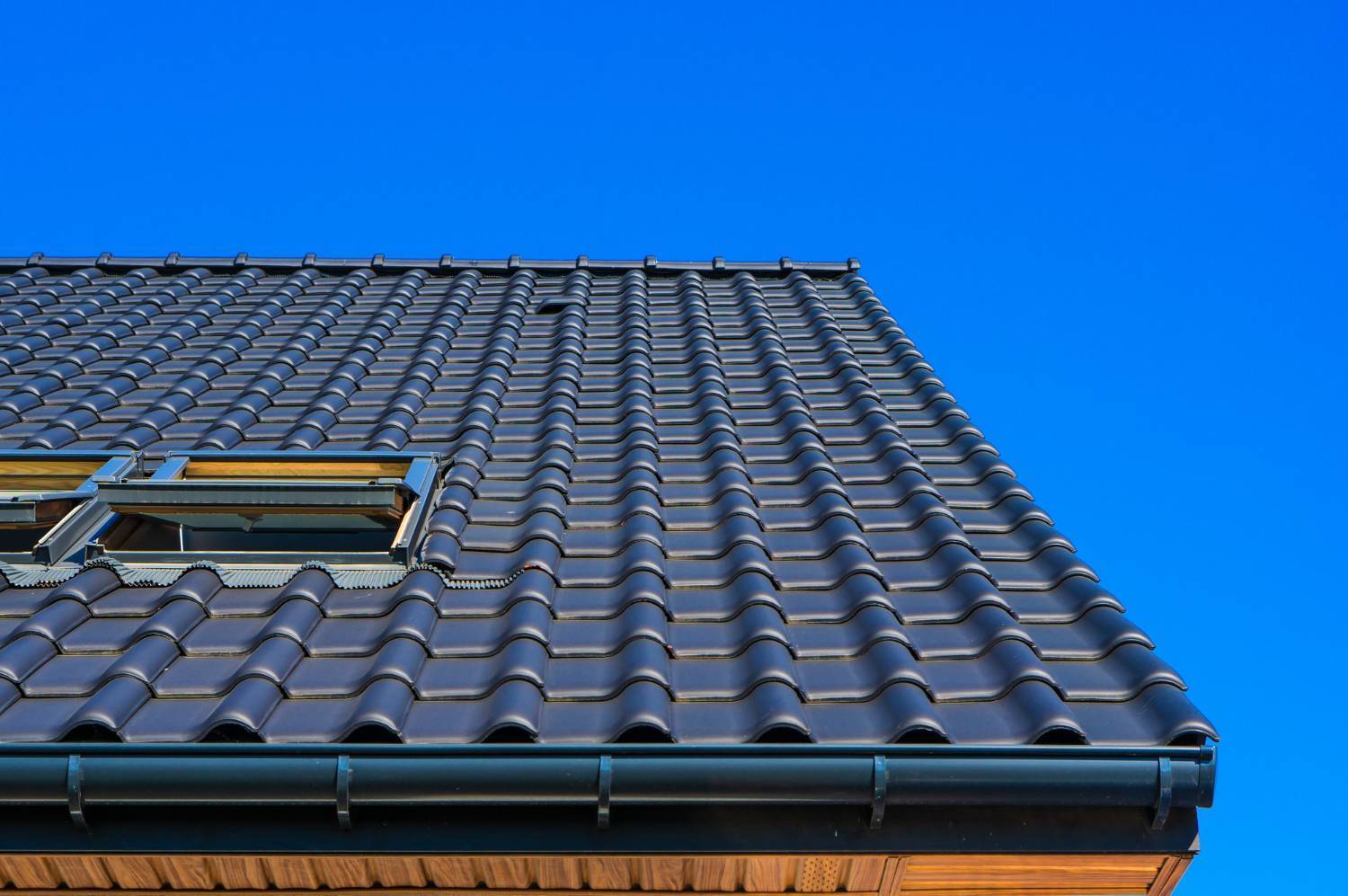
Roof surfaces are continuously exposed to environmental conditions such as dust, rainfall, pollution, and biological growth. Self-cleaning roof coatings are designed to repel water and prevent the accumulation of dirt, algae, and moss on roofing materials. These coatings often possess hydrophobic or superhydrophobic properties that allow rainwater to wash away contaminants naturally. By preventing staining and biological growth, self-cleaning roof coatings help extend the lifespan of roofing materials and maintain the structural and visual quality of buildings over time.
4. Self-Cleaning Solar Panel Coatings
Solar panels are highly sensitive to dust accumulation, which can significantly reduce their energy generation efficiency. Self-cleaning coatings applied to solar panel surfaces help prevent dust particles from adhering to the glass layer. These coatings are typically hydrophobic nano-coatings that allow water droplets to roll across the surface and carry away dust and dirt particles. As a result, solar panels remain cleaner for longer periods and maintain higher energy efficiency, reducing the need for frequent manual cleaning and water usage.
5. Anti-Microbial Self-Cleaning Coatings
Anti-microbial self-cleaning coatings are specially designed for environments where hygiene and cleanliness are critical. These coatings contain photocatalytic nanoparticles or antimicrobial agents that inhibit the growth of bacteria, fungi, and viruses on surfaces. They are commonly applied in hospitals, healthcare facilities, laboratories, public transport systems, and food processing areas. In addition to keeping surfaces visually clean, these coatings contribute to healthier indoor environments by reducing the spread of harmful microorganisms.
Advantages of Self-Cleaning Coatings
Self-cleaning coatings provide several important benefits for modern construction projects.
- Buildings coated with self-cleaning materials require less frequent cleaning, reducing labor and operational costs.
- By preventing the accumulation of dirt and biological growth, coatings help extend the lifespan of construction materials.
- Self-cleaning coatings reduce the need for chemical cleaners and excessive water usage, contributing to environmentally friendly building practices.
- Buildings maintain a cleaner and more attractive appearance for longer periods.
- Photocatalytic coatings can break down harmful pollutants such as nitrogen oxides and volatile organic compounds.
Challenges of Self-Cleaning Coatings
Despite their advantages, self-cleaning coatings also face certain limitations.
- Advanced nanotechnology coatings can increase construction costs.
- Photocatalytic coatings rely on sunlight and moisture to function effectively.
- Over time, coatings may degrade due to environmental exposure, abrasion, or mechanical damage.
- Since photocatalytic reactions require UV light, these coatings are less effective in indoor environments.
Applications of Self-Cleaning Coatings in Construction
• High-rise building façades – Self-cleaning coatings are applied on glass, metal panels, and curtain wall systems to prevent dust and pollution buildup, reducing the need for frequent façade cleaning.
• Windows and skylights – Coated glass surfaces allow rainwater to wash away dirt and stains, helping maintain transparency and reducing maintenance efforts.
• Solar panels – Hydrophobic self-cleaning coatings prevent dust accumulation on solar panels, ensuring better sunlight absorption and improved energy efficiency.
• Exterior walls and cladding – Self-cleaning paints and coatings are used on concrete, plaster, and stone surfaces to resist stains, pollution, and biological growth such as algae and mold.
• Roofing systems – Roof tiles and metal roofs coated with hydrophobic materials help prevent dirt buildup, moss growth, and water stains.
• Transportation infrastructure – Self-cleaning coatings are used in airports, metro stations, railway stations, and tunnels to maintain cleanliness in high-traffic areas.
• Hospitals and healthcare buildings – Antimicrobial self-cleaning coatings help reduce bacterial growth and improve hygiene on walls, tiles, and equipment surfaces.
• Public infrastructure and urban elements – Pavements, noise barriers, bridges, and public monuments can use photocatalytic coatings to reduce pollution and maintain clean surfaces.
• Commercial buildings and shopping malls – Large glass façades and interior surfaces use self-cleaning coatings to reduce cleaning costs and maintain aesthetic appeal.
• Industrial facilities – Factories and warehouses use protective self-cleaning coatings to prevent chemical stains, dust accumulation, and corrosion on structural surfaces.
Market Potential
As per, Research and Market report, the self-cleaning coatings market size has grown strongly in recent years. It will grow from $4.56 billion in 2025 to $4.9 billion in 2026 at a compound annual growth rate (CAGR) of 7.3%. The growth in the historic period can be attributed to urban pollution challenges, architectural innovation, glass facade adoption, coating technology advancement, demand for reduced cleaning costs.
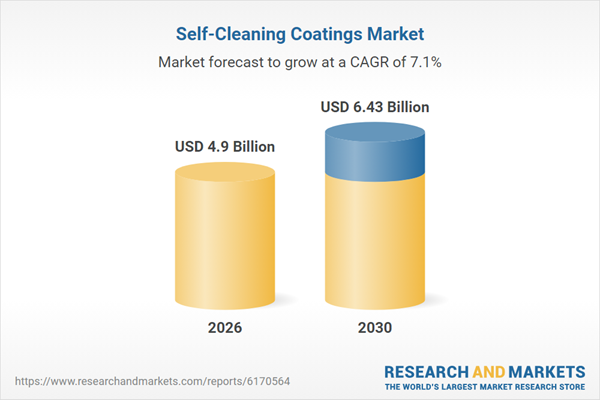
The self-cleaning coatings market size is expected to see strong growth in the next few years. It will grow to $6.43 billion in 2030 at a compound annual growth rate (CAGR) of 7.1%. The growth in the forecast period can be attributed to smart building construction, sustainable infrastructure growth, nanotechnology advancements, automotive exterior protection demand, expansion of green cities. Major trends in the forecast period include growing demand for low maintenance surfaces, expansion in architectural glass applications, rising use in automotive exteriors, increased adoption of photocatalytic coatings, focus on anti pollution surface technologies.
What's Driving The Demand?
The rising investment in construction projects is expected to drive the growth of the self-cleaning coatings market. Construction projects involve efforts to build, renovate, or develop structures such as buildings, roads, and infrastructure, requiring planning, design, labor, and materials. This increase in construction investment is primarily driven by rapid urbanization, as growing urban populations elevate the demand for housing, infrastructure, and public facilities. As investment in construction projects rises, there is a higher demand for durable and low-maintenance materials, such as self-cleaning coatings, to meet these needs.
For example, in July 2024, the UK’s Office for National Statistics (ONS) reported that total investment in the infrastructure sector reached $17.3 billion (£13.8 billion) in 2023, reflecting a 3.9% increase compared to 2022. As a result, the surge in construction investment is contributing to the growth of the self-cleaning coatings market.
The rising adoption of green building certifications is expected to drive the growth of the self-cleaning coatings market in the coming years. Green building certifications, such as LEED and BREEAM, assess buildings based on energy efficiency, water conservation, material performance, and long-term environmental impact.
The increase in these certifications is driven by government policies and investor priorities that emphasize measurable sustainability standards to qualify for incentives and reduce operating costs. Growing green building certifications are boosting demand for self-cleaning coatings by promoting low-maintenance, energy-efficient, and environmentally responsible surface technologies that reduce water usage, minimize chemical cleaning, and enhance building longevity.
For instance, in February 2024, according to the U.S. Green Building Council, a US-based non-profit organization, there were over 6,000 LEED-certified commercial projects worldwide in 2023, reflecting a significant rise in certified green building space compared to previous years. Therefore, the growing number of green building certifications is fueling the self-cleaning coatings market.
Future Trends in Self-Cleaning Coating Technology
Research is currently focused on improving the performance and durability of self-cleaning coatings.
Future developments include:
• Visible-light photocatalytic coatings that function indoors
• Self-healing coatings that repair surface damage automatically
• Smart coatings integrated with sensors for building monitoring
• Bio-inspired coatings that mimic natural surfaces
These innovations will further enhance the performance and sustainability of smart buildings.
Conclusion
Self-cleaning coatings are transforming the way buildings are designed and maintained. By combining nanotechnology, photocatalysis, and hydrophobic surface engineering, these coatings allow construction materials to remain clean with minimal maintenance. For smart buildings, self-cleaning coatings offer numerous benefits including reduced maintenance costs, improved durability, enhanced aesthetics, and better environmental performance. As research and technology continue to advance, these coatings are expected to become an essential component of sustainable and intelligent building systems.
Images- ssc.hkust, vnbuilding.vn