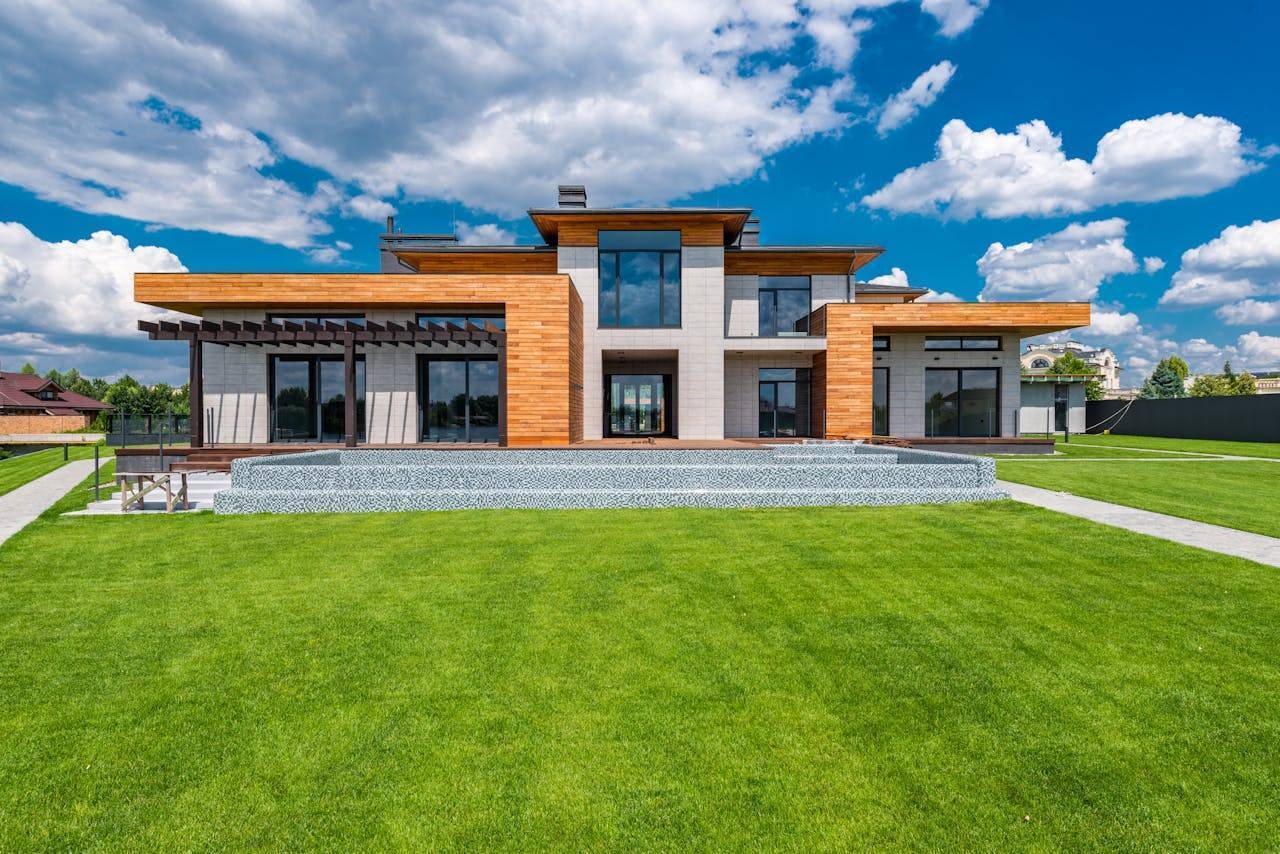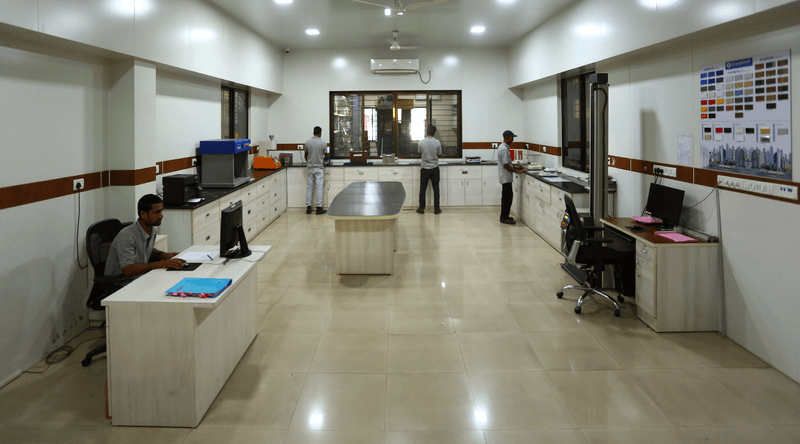

The Kaavi flooring, which has been practiced in Kerala and coastal Karnataka for 300 years, is known for its natural cooling property, longevity, and absence of any chemicals whatsoever. Used in old houses, temples, and coastal villas, it has gradually started falling out of practice with the advent of marble floors, vitrified tiles, and granite surfaces becoming the norm. However, the kaavi ffloorimg still receives recognition because of its sustainable nature and its ability to passively cool buildings.
Value of Kaavi flooring
The floors made from Kaavi material possess a natural cooling effect because of the mineral presence and porosity of the floor. The lime material tends to absorb heat slowly compared to the trapping of heat on the surface layers. As a result, there will be no chances of accumulating too much heat inside confined areas, especially in tropical nations like Kerala.
Unlike other modern flooring materials such as marble and tiles, the floors made from Kaavi do not need any chemicals. Thus, without the sealants or coatings on the floor, it makes the floor more porous and cooler than other floorings.
Raw Material Used and Craftsmanship Involved
- Use of lime as the main raw ingredient
- Application of iron oxide for strength and color
- Use of water to mix and apply
Kaavi flooring involves the use of a simple composition of lime, iron oxide, and water. There are no additives such as cement and other chemical substances that go into making the floor. It is applied on prepared floors using a hand-mixed paste of lime and iron oxide. After application, the surface remains uncured until it naturally hardens over a period of time.
A lengthy process involving extensive polishing of the surface using coconut oil is the next step in the craftsmanship of kaavi flooring. It takes several hours to polish the surface, giving it a smooth and shining surface, much like glass. This intensive process is also a factor behind the rarity of the craft today.
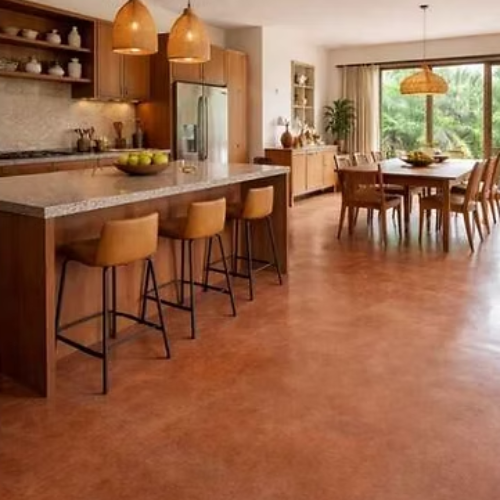
Function of Coconut Oil in Floor Finishings
The role of coconut oil in the process of floor finishings cannot be overlooked. It is a vital ingredient of the process and plays a significant role in the process of polishing. Besides making the surface more glossy, coconut oil increases the strength of the surface. Coconut oil does not form any sealant on the surface.
Reasons for the Coolness of Kaavi Flooring
Kaavi floors remain cool since the floors made from lime absorb the heat slowly rather than holding it in during the daytime. The absence of any artificial coating on these floors makes the surface porous, which ensures that it regulates the heat naturally. One of the common reasons for hot floors in modern sealed floors such as tiles or marble flooring is heat retention at the floor level. Therefore, Kaavi floors become comparatively cooler to walk on during summers.
A Component of a Climate Responsive Home Design
The use of Kaavi flooring was a component of a more comprehensive climate responsive home design in Kerala. These traditional homes featured thick laterite and mud walls, which made heat transmission difficult. Open courtyards contributed to good air circulation inside the house. The high ceilings helped to facilitate air circulation as well, with hot air rising up and escaping. Verandahs, which provided shade, also ensured that sunlight did not penetrate inside the house.
Applications of Kaavi Flooring
Kaavi flooring is not just a traditional craft; it has practical uses in both heritage and modern sustainable construction. Its natural cooling ability, durability, and chemical-free composition make it suitable for several types of spaces.
Traditional Applications
- Used in ancestral homes in Kerala and coastal Karnataka
- Common in temples and sacred spaces due to its natural finish
- Found in courtyards and verandas of old houses
- Used in coastal mansions for thermal comfort in humid climates
Residential Applications
- Living rooms in traditional-style homes
- Courtyards and open indoor spaces
- Bedrooms in eco-friendly houses
- Heritage-style villas and bungalows
Temple and Cultural Spaces
- Temple floors for their natural, non-slippery finish
- Meditation halls for cool and calm surface conditions
- Cultural heritage buildings and restoration projects
- Traditional community halls in villages
Outdoor and Semi-Open Spaces
- Verandas and shaded walkways
- Courtyards in traditional layouts
- Semi-open seating areas in resorts or homestays
- Community gathering spaces in warm climates
Durability and Longevity
Another characteristic of kaavi floors is their high degree of durability. Unlike most modern materials that wear out easily, kaavi floors tend to improve with usage. The pressure exerted by people’s feet causes the floor surface to become more polished with time. Kaavi floors can last for many years, up to even a hundred years.
Environmental and sustainability advantages
- Kaavi floorings are very pertinent in the environmentally-aware society of today.
- Natural and non-toxic substances
- Carbon footprints are very low when compared to concrete floors
- No synthetic adhesives or coating agents used
- Local sourcing of materials ensures reduced environmental degradation
- Passive cooling system
This makes Kaavi an excellent example of green architecture that existed even before the concept was introduced.
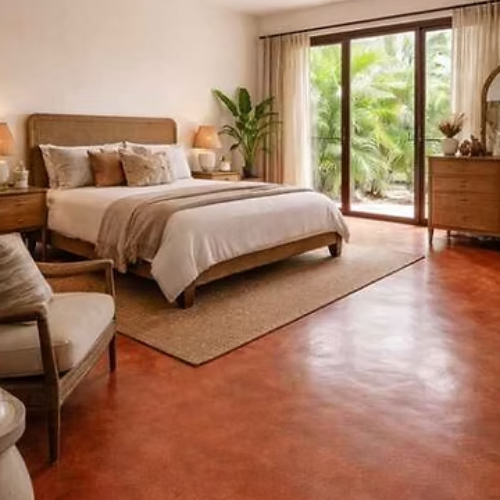
Reasons for the Decline of Kaavi Flooring
Despite its many advantages, Kaavi flooring is gradually fading from mainstream construction. One of the primary reasons is the shift toward faster construction methods, where materials like tiles, marble, and granite offer quick installation and uniform finishes. Modern homebuyers and developers often prioritize speed, cost-efficiency, and standardized aesthetics, making traditional, time-intensive techniques less attractive.
Another major challenge is the shortage of skilled artisans. Kaavi flooring requires specialized craftsmanship, from preparing the lime-based mix to the labor-intensive polishing process using coconut oil. With fewer trained workers and limited knowledge transfer to younger generations, the practice is steadily declining.
Additionally, contemporary construction trends favor low-maintenance and ready-to-use materials, whereas Kaavi flooring demands patience, manual effort, and periodic care. As a result, despite its sustainability and natural cooling benefits, Kaavi flooring is being replaced by more convenient modern alternatives.
Why It Is Relevant to Our Time?
Against the backdrop of the warming planet and increased electricity needs of modern times, Kaavi floors become an example of how effective cooling can be achieved without resorting to mechanical means. It becomes clear that in the past, people used natural heat tendencies to their advantage.
The kaavi flooring system is not only a traditional practice; it is also an approach to designing homes with the consideration of climatic conditions in mind. This reveals that there are ways through which sustainability and comfort can be attained with minimal resources and a profound knowledge of nature.