
Aerographite: Ultra-Light Material Redefining Strength
- Discovered in 2012 by scientists at Hamburg University of Technology and Kiel University, aerographite is one of the lightest solid materials ever created.
- With an ultra-low density of 0.18 mg/cm³ and 99.99% air composition, it can support up to 40,000 times its own weight.
- Built from a 3D network of hollow carbon microtubes, it is highly compressible (up to 95%) and fully recovers its shape.
- Electrically conductive, superhydrophobic, vibration-resistant, and stronger under compression.
- Applications span lightweight architecture, aerospace engineering, energy storage, oil spill cleanup, and advanced filtration systems.
The Hamburg University of Technology partnered with Kiel University scientists , in 2012, to design an incredible new substance dubbed “aerographite.” This dark, web-like substance is made of carbon and has quickly gained the world’s attention as one of the lightest substances in the world. It has a density of only 0.18 milligrams of mass per cubic centimeters of space, making it 5,000 times lighter than water. It can even rest on the surface of air if the conditions are right. It comprises approximately 99.99 percent empty space, yet it has remarkable stability.
The significance of aerographite lies not only in its lightness, but also in its adaptability to modern construction and engineering. It has a complex structure consisting of connected carbon tubes that enable the material to bounce back even after compression. Such a structure enables the creation of a material that is both light, like feathers, and resilient. It provides a platform for the creation of modern construction materials that are light yet strong enough to hold structures together.
The scientists are currently exploring its impact on the construction industry, as well as its application to aerospace engineering, batteries, and environmental filters. As the construction industry continues to explore materials that are light, yet strong enough to hold structures together, aerographite represents a revolutionary shift in the field of material engineering.
What Is Aerographite?
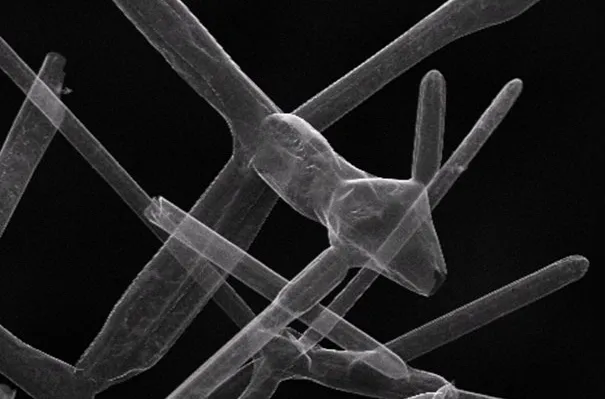
Aerographite is a synthetic carbon-based material that is made of a three-dimensional arrangement of hollow micro-tube structures that are connected to each other. The micro-tubes are made of carbon, and their diameter is about 15 nanometers thick.
It is arranged in a mesh or a sponge structure, but it is different from a sponge as it is electrically conductive and strong.
Aerographite is different from a combination of a sheet of graphene or a combination of carbon nanotubes arranged in a linear structure. The structure of Aerographite is not a combination of a sheet of graphene; rather, it is more similar to vitreous carbon.
Key Properties
- Extremely low density (0.18 mg/cm³)
- Highly compressible (can compress up to 95%)
- Compresses fully but returns to shape
- Electrical conductivity
- Superhydrophobic (water-repelling) properties
- Highly resistant to vibrations
- Can withstand weights thousands of times its own weight
One of the most interesting properties of Aerographite is that it becomes stronger and more electrically conductive as it is compressed. It returns to its original shape once the compression is released without any damage to the structure. This is a unique feature of this ultra-light material.
The Science Behind Its Production
Aerographite is synthesized via a unique form of chemical vapor deposition. The unique feature of this synthesis is the use of a sacrificial template, zinc oxide tetrapod nanocrystals.
Step-by-Step Production Process of Aerographite
Formation of Zinc Oxide Template
Zinc powder is heated to 900°C to form ZnO tetrapod nanocrystals.
Carbon Coating via CVD Method
A carbon-containing gas is introduced, and carbon atoms deposit on the ZnO template, forming graphite layers on the ZnO template.
Removal of the Template
Hydrogen gas is introduced, and it reacts with ZnO, evaporating it, leaving behind the carbon structure.
Final Structure of Aerographite
A hollow network of interconnected carbon microtubes, i.e., Aerographite, is obtained.
Mechanical and Physical Performance
- Although nearly all air, Aerographite behaves like a durable structural material.
- It can withstand compressive stresses around 160 kilopascals at certain densities.
- It has a low Poisson’s ratio, allowing elastic recovery after extreme compression.
- It can carry up to 40,000 times its own weight.
- It maintains conductivity even when bent or compressed.
Additionally, Aerographite is optically opaque despite being mostly air. It absorbs high amounts of light radiation, giving it a deep black appearance.
Applications in Construction and Architecture
In architecture, Aerographite is a revolutionary concept for lightweight structural parts and multifunctional materials.
The following applications have been identified for Aerographite in architecture:
- Lightweight reinforcements for structural parts with minimal weight additions
- Sensors for building health monitoring systems
- Lightweight facades
- Electrically conductive coatings for smart buildings
- Vibration dampeners
As it is electrically conductive and hydrophobic, it has the potential for use in smart building envelopes, which might include energy harvesting or environmental sensing capabilities. Research has shown its potential for use in composite materials.
Environmental Applications
The porous and carbon composition of Aerographite enable it to absorb contaminants. The following environmental applications have been identified for Aerographite:
- Oil spill clean-up
- Air filtration systems
- Water purification systems
- Industrial gas absorption
The lightweight composition of Aerographite enables it to be easily deployed for large-scale environmental disasters.
Comparison with Other Advanced Materials
Aerographite belongs to a family of emerging carbon materials including graphene and aerogels. However, unlike graphene—which is nearly transparent and extremely thin—Aerographite is opaque and structurally three-dimensional. Compared to traditional aerogel, it is mechanically stronger and inherently hydrophobic without post-treatment.
Sustainability and Future Potential
From a sustainability perspective, Aerographite offers intriguing possibilities:
- Reduced transportation energy due to lightweight properties
- Lower material usage in structural systems
- Enhanced energy efficiency in batteries and storage systems
If production processes become scalable and cost-effective, Aerographite could redefine material efficiency in construction, aerospace, and renewable energy sectors.
Its near-weightless nature makes it especially appealing for future lunar and Martian habitats, where transport costs are critical. Lightweight, strong materials would significantly reduce launch mass and construction effort in extraterrestrial environments.
Global Market potential

Techsci Research states the worldwide Aerographite industry stood at 5.24 million dollars in 2024. By 2030, it could climb to 6.95 million, growing about five percent each year on average. This material is man- made, built from hollow carbon tubes linked together like a web. So light it barely weighs anything, among the most featherweight solids ever made. Rising need for strong yet minimal, weight substances powers much of its growth today. Take aircraft and car manufacturing, they're using more of it to cut down fuel use while boosting how well things run. Because when parts weigh less, machines often work better.
Key Market Challenges
Expensive ways to make aerographite slow down its market rise across the world. Because it takes so much money to produce, companies hesitate to adopt it widely, particularly when budgets are tight. Making this material demands complicated steps along with custom tools, driving up expenses. That higher cost makes it less appealing next to substitutes like graphene or carbon nanotubes, even if they perform similarly without straining wallets.
Price matters a lot when it comes to reaching more buyers. Back in early 2025, a report from NAM showed nearly two out of three factory managers were worried about materials getting pricier, forecasting a rise near six percent soon. That kind of pressure leaves little room for expensive options such as aerographite, except in rare cases where performance justifies the spend. Because of this, its spread stays narrow, blocked from wider use across industries like car production or everyday fabrication, places where saving money on materials weighs heavily in decisions.
Conclusion
What if something could be lighter than air but still hold heavy loads? That is aerographite. Scientists made it about ten years back. Not long after, it began breaking old rules in material design. This substance floats like smoke. Still, it resists crushing under massive pressure compared to its mass. Ideas once thought impossible now seem within reach because of such advances.
Out past the atmosphere, solar sails glide; meanwhile, back on land, buildings respond like living things. Even though it is early days, one thing stands clear, Aerographite changes what we expect from stuff itself. Instead of dense blocks, think networks shaped like frost, built atom by atom. Weight almost vanishes, yet strength stays woven into thin lace of carbon. Here, lightness becomes the foundation.
A step at a time, studies push Aerographite closer to real, world use, shifting it out of labs into planes, green buildings, even advanced power setups. Its rise might quietly redefine how we build things, favoring lightness without losing strength, simply by working better under pressure.
Images-theverge.com, sci.news