
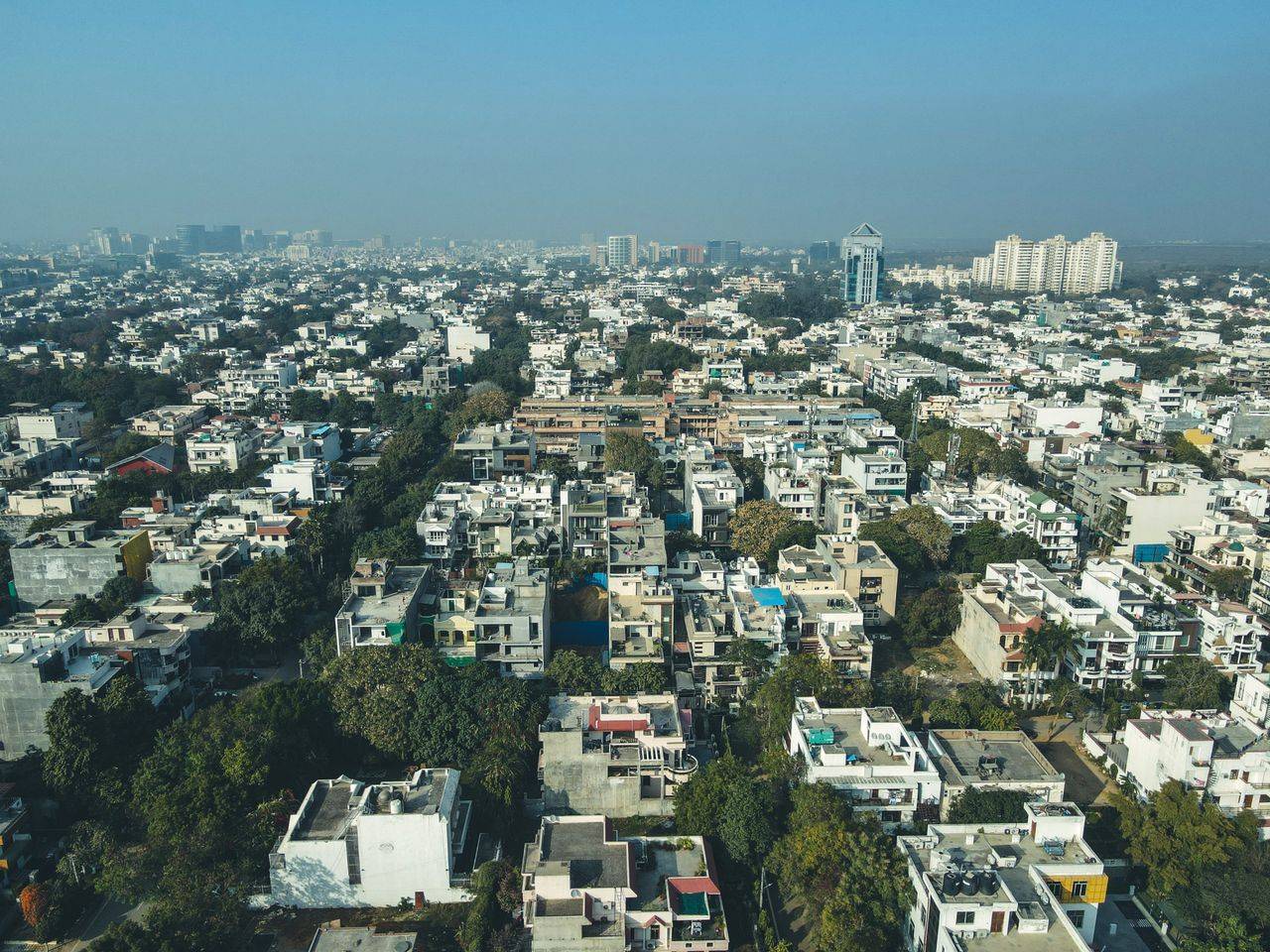
Delhi’s new Master Plan for Delhi 2047 has been framed primarily as a response to the capital’s housing shortage, with the government envisaging around 40 lakh additional homes over the next two decades. A large part of this supply is expected to address affordable housing, particularly through transit-oriented development (TOD), redevelopment and land pooling. But as the plan opens up greater development potential across parts of the city, another question is beginning to emerge: could the next wave of organised housing in Delhi extend beyond affordability into the premium and luxury segments as well?
The question comes against a backdrop of strong premiumisation across the wider NCR housing market. According to ANAROCK, luxury and ultra-luxury homes accounted for 92% of new residential launches in NCR in Q1 2025, with luxury contributing 22% and ultra-luxury 70%. Gurugram, in particular, has emerged as a major centre for high-value residential development, supported by larger land parcels and established private-sector participation.
Delhi, by comparison, has historically had a more fragmented residential development structure, with large parts of the city dominated by plotted housing, cooperative group housing and established neighbourhoods. Recent reporting on MPD-2047 notes that the plan seeks to relax density and height restrictions and encourage greater private-sector participation, potentially creating a more organised development environment within the capital.
The planning framework itself, however, remains strongly focused on housing access. The Centre says MPD-2047 envisages around 40 lakh new affordable homes, including approximately 18 lakh affordable homes in TOD zones. It also reduces the minimum area required for redevelopment of existing group housing, DDA housing and government housing from 40,000 sq m to 3,000 sq m, with around seven lakh additional dwelling units expected through redevelopment.
This does not mean that all the new development potential will translate into premium or luxury housing. In fact, the TOD framework specifically prioritises smaller homes, with reporting on the plan noting that 65% of permissible construction in TOD zones is required to comprise flats with a carpet area below 60 sq m. The premium and luxury opportunity, therefore, may emerge selectively in locations where land values, redevelopment economics, connectivity and buyer demand support larger homes and higher-value projects.

Samir Jasuja, Founder and CEO, PropEquity, said, “MPD-2047 can bring a structural change to Delhi’s residential market by unlocking development potential in locations that were earlier constrained by low FAR, height restrictions or fragmented ownership. The opportunity is particularly meaningful around transit corridors and ageing group housing colonies, where redevelopment can create larger, better-planned communities. However, the success of the policy will depend on execution, infrastructure readiness and the ability to align higher density with real demand. Developers will need to adopt a calibrated approach rather than assume that every newly opened parcel will automatically become commercially viable.”
The economics of development will remain central to determining what gets built. Higher development potential can improve the viability of difficult or fragmented land parcels, but premiums, infrastructure charges, construction costs, approval timelines, parking requirements and market absorption will continue to influence project feasibility.
There is already a local example of how private residential development can combine density with a premium community proposition. DLF ONE Midtown in West Delhi comprises 913 residences across four 39-storey towers and forms part of the larger DLF Midtown ecosystem, alongside commercial, retail and recreational uses. The project also sits within a larger setting of more than 100 acres of DDA green.
The relevance of such developments to MPD-2047 is not that the master plan will automatically replicate them, but that it demonstrates the kind of residential product that can emerge when higher-density housing is combined with amenities, open spaces, retail, wellness and connectivity.
This could become particularly significant as Delhi's housing market expands across multiple income categories. The master plan itself envisages housing through TOD, land pooling, redevelopment and high-density development, while also seeking to improve the quality of the built environment and infrastructure.
The broader implication is that MPD-2047 may not simply determine how many homes Delhi builds, but also where and how different kinds of homes can be developed. Affordable housing is likely to remain the policy priority, but the unlocking of land and development potential could create opportunities for mid-income, premium and luxury projects in locations where the underlying market supports them.
For Delhi, that could mean a residential market that begins to look less fragmented and more diverse, while still retaining the established neighbourhoods that define much of the city. The eventual outcome, however, will depend less on the additional FAR alone and more on how land, infrastructure, connectivity, approvals and market demand come together.