

Key Highlights: Bicholim’s 3.17x Land Appreciation Outlook
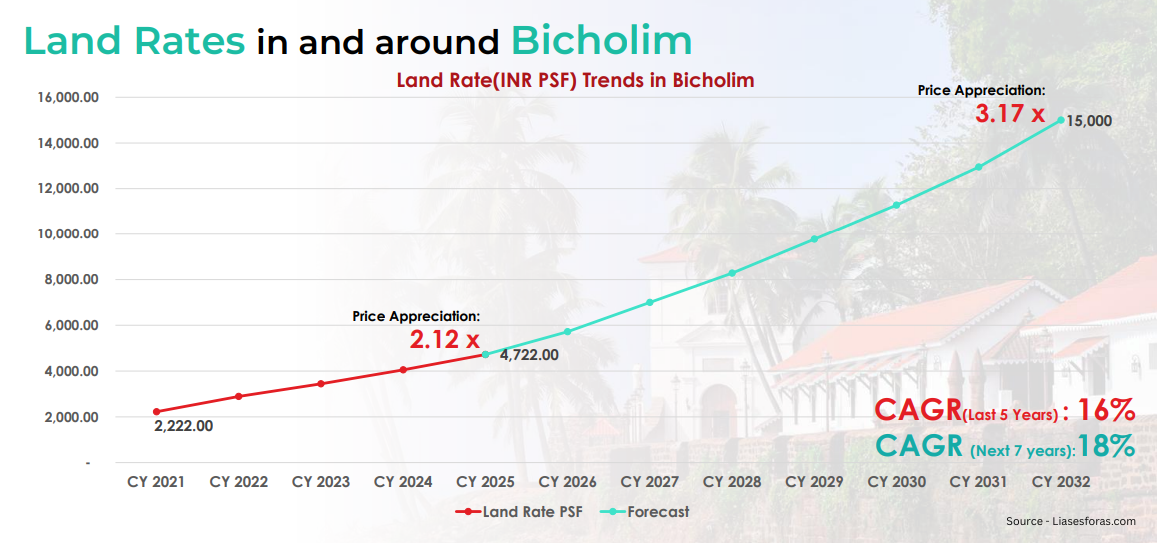
- 3.17x projected growth by 2032, with an estimated 18% CAGR over the next 6–7 years, following a strong 2.12x rise in the past five years.
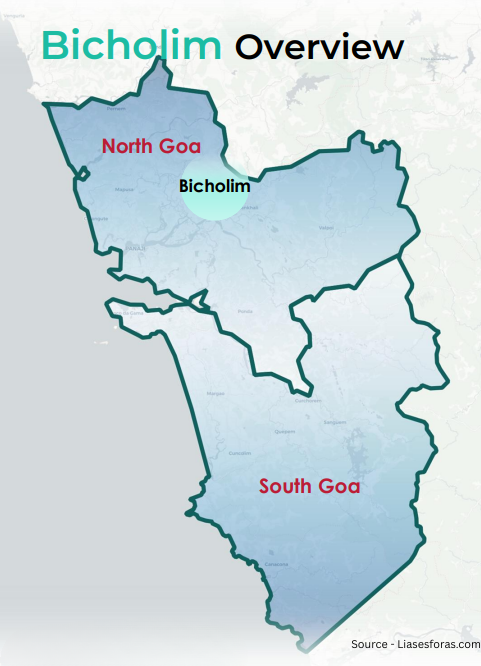
- Emerging growth corridor in North Goa, with Bicholim and the east-of-NH-66 belt identified as the next phase of real estate expansion.
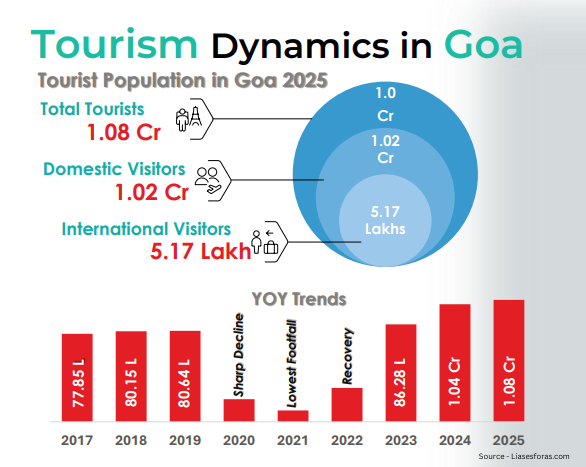
- Tourism-driven demand strength, as Goa attracted 1.08 crore tourists in 2025, supporting sustained real estate absorption and rental demand.
- Strong rental yields for luxury villas, offering 10–12% returns with peak occupancies ranging between 90–98%.
- Infrastructure push boosting connectivity, led by Manohar International Airport, upgrades to NH-66, and proposed regional expressway developments.
According to Liases Foras, an independent, non-broking real estate research firm, its latest report titled “Bicholim: Goa’s Emerging High-Appreciation Investment Destination” highlights Bicholim as one of Goa’s fastest-growing real estate hotspots.
The report finds that Bicholim, known for its central location and relatively tranquil inland character, is emerging as one of Goa’s most promising growth corridors. It identifies Bicholim and the broader east-of-NH-66 belt as the next phase of real estate expansion in North Goa, driven by ongoing infrastructure upgrades, improving regional connectivity, and a structurally limited supply of developable land.
Land rates in and around Bicholim have more than doubled (2.12x) over the past five years, reflecting a historical CAGR of approximately 16%. Looking ahead, the micro-market is projected to enter its next growth phase, with prices expected to rise by a further 3.17x over the next six to seven years, translating into an estimated CAGR of about 18%. This trajectory indicates that Bicholim remains at an early stage of its value cycle, with significant headroom before the next phase of price acceleration sets in.
The report places this growth outlook within the context of Goa’s structurally resilient, tourism- led economy. In 2025, the state attracted approximately 1.08 crore tourists, supported by a 70.6% rise in domestic tourism and a near 60% recovery in international arrivals. Goa continues to rank among India’s most preferred global destinations, underpinning a stable, year-round demand profile. This sustained tourism momentum provides a strong economic base for long- term real estate appreciation, particularly in emerging micro-markets that are still early in their growth cycle and is translating into a robust premium rental ecosystem.
“Bicholim has moved beyond being viewed as a peripheral inland market and is increasingly taking shape as a focused growth corridor, supported by airport-led access and visible infrastructure execution,” as per Liases Foras report. “The assessment indicates that the next phase of North Goa’s price discovery is likely to originate here. At this stage of the cycle, value creation is being driven by early positioning and holding discipline, as infrastructure-led demand begins to translate into sustained absorption rather than short-term price spikes,” as per Liases Foras.
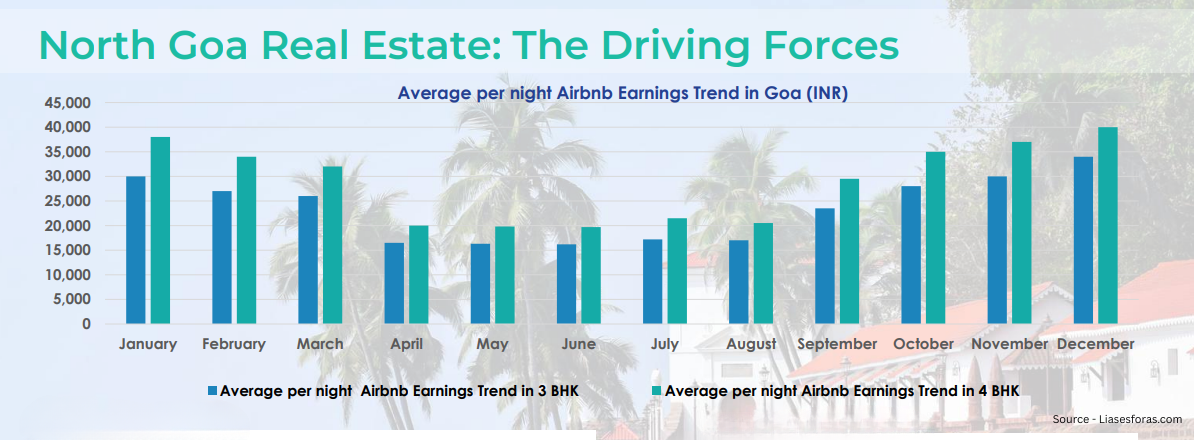
Across Goa, luxury villas are reporting estimated rental yields of 10–11% for 3 BHK units and 11– 12% for 4 BHK units, with peak season occupancies consistently ranging between 90% and 98%. This creates a meaningful income layer alongside long-term capital appreciation, particularly for investors evaluating holiday homes and institutional-grade, high-end rental assets.
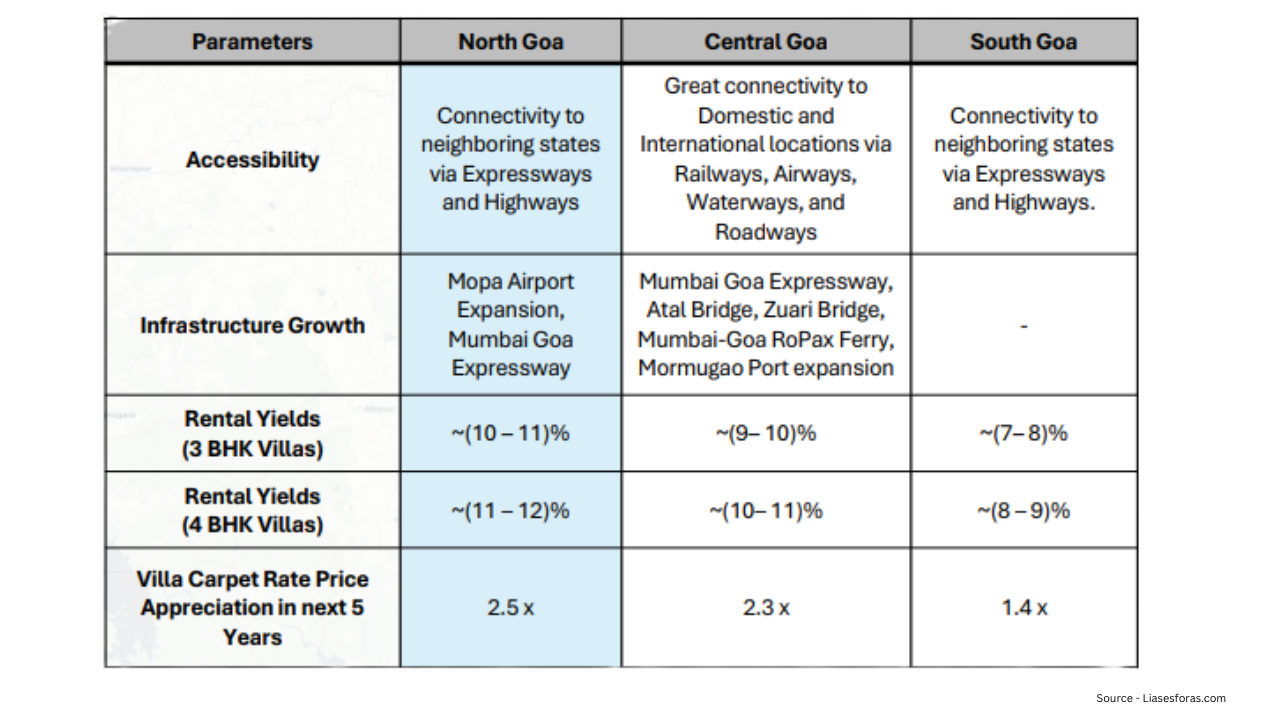
Building on these demand fundamentals, the report identifies infrastructure as a key catalyst shaping Bicholim’s next phase of growth. Major triggers include the Manohar International Airport (MOPA) as a continuing connectivity engine for North Goa, upgrades to the NH-66 Mumbai–Goa highway, the Bicholim and Assonora bypasses aimed at easing intra-regional congestion, and the proposed Shaktipeeth Expressway, which is expected to further strengthen long-haul access into the state over the medium term.
Together, these developments are expanding the demand catchment, improving ease of access, and progressively tightening the supply of organised, developable land as planned development scales up.
The report also highlights the structural supply constraints shaping Goa’s land market. A significant portion of the state’s land is governed by environmental and planning regulations, while only a limited share is available for settlement and urban development. As developable land becomes increasingly scarce, this dynamic is being reinforced by sustained public investment and infrastructure-led spending by the state.
Overall, the report positions Bicholim as an emerging inland micro-market shaped by infrastructure momentum, improving connectivity, and regulated land availability. As development activity gradually expands beyond Goa’s established coastal belts, the report notes that locations such as Bicholim are beginning to attract attention for their relative affordability and early-stage price discovery.