
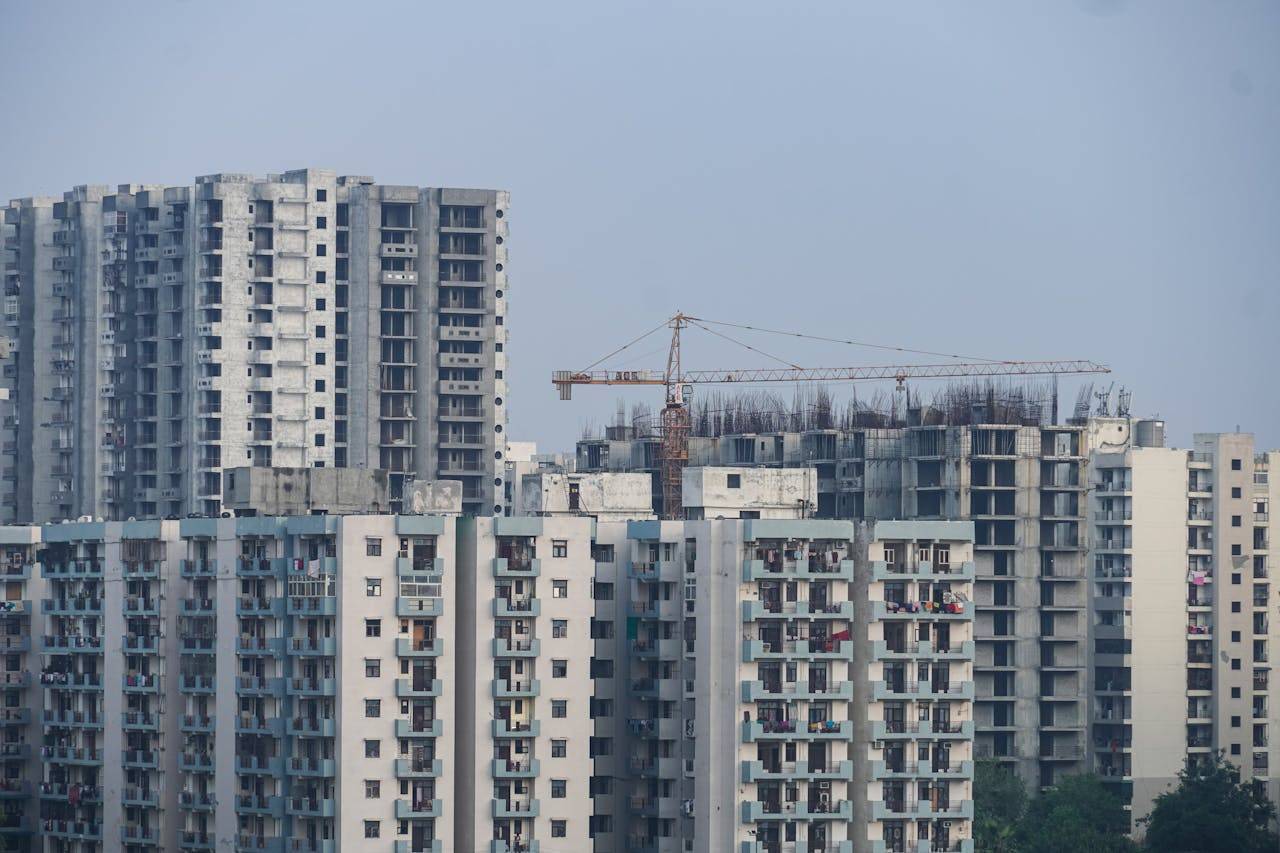
The housing sales in India’s top 9 cities continued to decline in Q1 (January-March) 2026, falling below the 1 lakh unit mark after 18 quarters, owing to fewer supply across most major cities.
According to NSE-listed real estate data analytics company PropEquity, housing sales fell by 13% YoY and 6% QoQ to 98,761 units while launches fell by 19% YoY and 8% QoQ to 92,411 units in January-March 2026.
Bengaluru, with sales of 17,991 units, emerged as the highest selling market. The city recorded 16% QoQ and 3% YoY growth. Delhi-NCR with 12,141 units recorded 13% YoY growth. However, on QoQ basis, sales fell by 1%. All other cities saw a decline in sales.
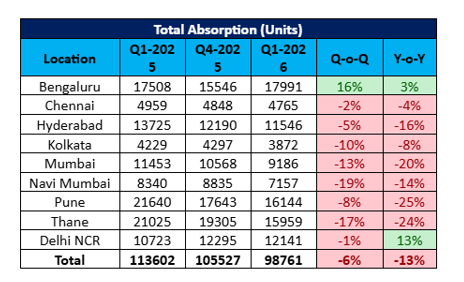
Samir Jasuja, Founder & CEO, PropEquity said, “Housing sales continued to moderate in the first quarter of 2026 with Delhi-NCR and Bengaluru emerging as outliers. This reduction is on account of low supply across most cities. Close to 22,000 lesser units were supplied in Q1 2026 as compared to the same period last year.”
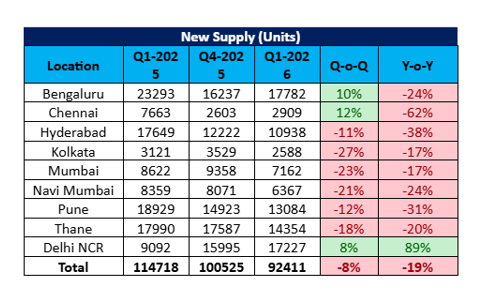
On the supply front, Delhi-NCR with 17,227 units launched in Q1, has come of age to emerge as the second biggest market. Amongst the top 9 cities, Delhi-NCR remains the only city to record 89% YoY and 8% QoQ growth.
Bengaluru with 17782 units launched regained the top spot recording 10% QoQ growth and 24% YoY decline.
Chennai, meanwhile, with 2909 units saw 12% QoQ growth and 62% YoY decline in supply.
All other cities saw a decline in new launches.
Jasuja added, “While Delhi-NCR and Bengaluru saw similar level of housing supply in Q1, the former witnessed lesser absorption as compared to the latter as high-ticket launches impacted the sales in Delhi-NCR. Also, it is for the first time post-covid that Delhi-NCR has seen more supply than Pune, Hyderabad and Thane - the traditional high supply markets.”
Mr. Umesh Gowda H A, Chairman and Founder, Sanjeevini Group, a Bengaluru based real estate developer, said, "Bengaluru’s real estate market continues to be on a strong and sustainable growth trajectory, driven by robust end-user demand across segments. The steady increase in supply remains well-aligned with this demand, reflecting developers’ prudent and market-responsive pricing strategies. This momentum is further supported by consistent income growth, underpinned by the city’s strong employment ecosystem and thriving economic fundamentals."
India’s housing market is showing signs of a gradual slowdown, with activity easing across several major cities. This moderation is largely driven by tighter supply, shifting buyer preferences, and evolving market conditions. However, the overall outlook remains mixed rather than weak, as certain cities continue to demonstrate resilience and attract strong demand. The current phase reflects a natural market adjustment, where growth is becoming more selective and performance varies across regions, indicating a transition toward a more balanced and sustainable real estate cycle.






.png)