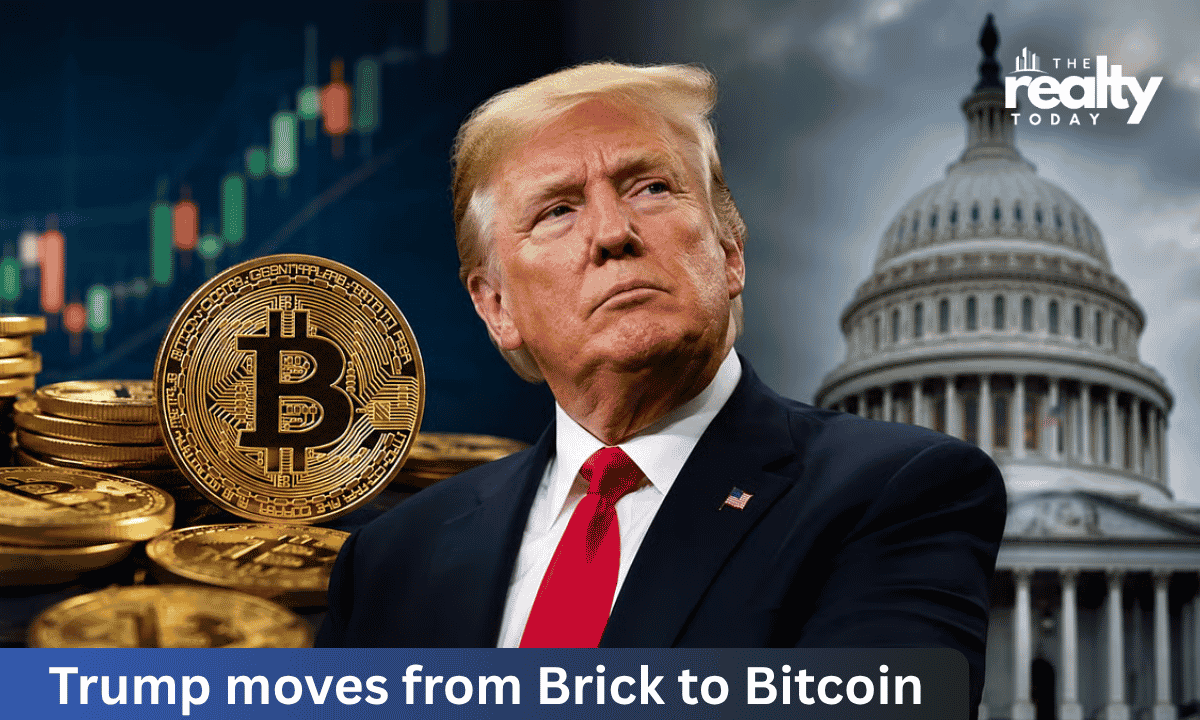
Donald Trump was a real estate businessman decades before he was a politician. Real estate is where his name, his money and his image all came from. But in 2026, something has changed for the first time ever, real estate is no longer his biggest source of income. Here's the full story, from where he started to what's happening with his business right now.
How He Got Started
Trump began working in real estate in the early 1970s. He joined his father Fred Trump's company, which built and managed housing in Brooklyn and Queens, New York. Fred Trump was a successful builder, but he worked mostly outside Manhattan, in middle-class neighborhoods. Donald Trump wanted something bigger and more glamorous.
He moved into Manhattan real estate in the mid-1970s, starting with the renovation of the old Commodore Hotel near Grand Central Station, which he turned into the Grand Hyatt. That project made him known in New York business circles. A few years later, he built his most famous project: Trump Tower on Fifth Avenue, which opened in 1983. The building's brass, marble and glass style became his signature look, and the name "Trump" started to mean luxury.
Growth, Casinos and Bankruptcies
Through the 1980s, Trump expanded fast. He bought hotels, an airline, a yacht and casinos in Atlantic City, including the Trump Taj Mahal. He borrowed heavily to fund this growth and by the early 1990s, that debt caught up with him. Several of his companies filed for bankruptcy, including his casino business, which went through multiple bankruptcy filings over the years.
Instead of walking away from real estate, Trump changed how he did business. Rather than owning every building outright, he began licensing his name to other developers. They would build a hotel, tower or golf resort, pay him a fee and put "Trump" on the building. This let him make money with much less financial risk to himself. It's the same basic model his company still uses today.
From Reality TV to the White House
In the 2000s, Trump's fame grew even more through his reality TV show, "The Apprentice," which presented him as a tough, successful businessman. This TV image helped him license his name to more and more projects around the world including golf courses in Scotland and Dubai, towers in India, Indonesia and Turkey, and hotels across the US.
When he ran for president and won in 2016, his businesses became a source of controversy, since he did not fully separate himself from them. He returned to real estate and business full-time after leaving office in 2021, then won a second term in 2024 and returned to the White House in 2025. This time, his businesses have expanded even faster and he has also added something new to his empire: cryptocurrency.
The Big News This Week: A $2.2 Billion Year
On June 30, 2026, Trump released his yearly financial disclosure, a report every US president must file. It showed he earned more than $2.2 billion in one year, a huge jump from about $622 million the year before. The full report runs close to 927 pages.
Here's the surprising part: for the first time ever, real estate is not his top earner. Over $1.4 billion of his income came from crypto ventures. Interestingly, the crypto business barely existed in his earlier disclosures before 2024. Around $515 to $550 million of that crypto money came from World Liberty Financial, a cryptocurrency company he co-founded with his sons.
Real estate still made him good money, roughly $300 million, but it's now clearly his second-biggest business, not his first. Mar-a-Lago, his Florida club, alone brought in $77 million.
Why People Are Worried
Ethics experts say the crypto income is a bigger red flag than real estate ever was. One expert explained that with real estate, there's a limit, like, only so many hotel rooms you can book or rounds of golf you can play but with crypto, there's no limit at all. Anyone anywhere in the world can now send him money simply by buying his crypto coin, without needing a hotel booking or a business deal in between.
Real estate raises its own concerns too. Nearly all of his new real estate projects are now being built in other countries, especially in the Middle East. Building overseas means he needs cooperation from foreign governments for permits, tax breaks, utilities and roads. Legal experts say this gets complicated fast, since a law professor pointed out that presidents are not allowed to accept money or benefits from foreign governments and questioned whether investments like reported UAE money flowing into World Liberty Financial cross that line.
The White House rejects the criticism. A spokesperson said neither Trump nor his family has ever had a conflict of interest, and that everything he does as president is meant to serve the American people.
His Real Estate Business Today, By the Numbers
Even with crypto now ahead of it, Trump's real estate business is still large and still growing fast around the world:
● 24 branded projects are currently being built in other countries which is more than three times the number he had running overseas before this term began.
● India: Old, previously inactive Trump companies tied to Gurugram, Noida and Pune started earning money again. His Indian business partners are now developing eight Trump-branded projects across the country.
● Middle East expansion: New licensing deals cover projects in Bucharest, Doha, and Abu Dhabi's Al Raha Beach.
● US golf clubs and resorts: His 16 golf courses and clubs worldwide brought in more than $470 million combined, with both Mar-a-Lago and his Bedminster club in New Jersey posting strong growth since he returned to office.
What He's Doing for US Housing
Alongside growing his own real estate business, Trump has also pushed several housing policies back home in the US:
● He announced plans to stop large investment firms from buying more single-family homes, arguing that regular families are being priced out. But critics point out that around 90% of investor-owned homes are actually bought by small owners with fewer than 11 properties, not big companies so the real-world effect of this rule may be smaller than it sounds.
● He had the government buy $200 billion worth of mortgage-backed securities, a move meant to help push home loan rates down.
● By February 2026, the White House pointed to mortgage rates falling to their lowest level since September 2022, and apartment rents dropping for six straight months, as proof the plan was working.
● Still, economists say the bigger issue, a long-running shortage of homes being built, hasn't really been solved and new tariffs and immigration crackdowns may be making construction even slower.
Why This Matters for Indian Real Estate
Two things are worth watching closely from India. First, the Trump name is spreading fast here with active or restarting projects in Gurugram, Noida and Pune; and eight branded developments in the pipeline overall. As global buyers and developers keep partnering with the Trump brand, it's becoming a bigger part of India's luxury and commercial real estate story. Second, the debates happening in the US about big investors buying homes, about mortgage rates, about housing supply are being watched by the same global capital and private equity players who also invest in Indian real estate. What happens to housing policy in Washington doesn't stay in Washington.
Sources: US Office of Government Ethics disclosure, AOL, CryptoBriefing, IBTimes UK, Bloomberg