
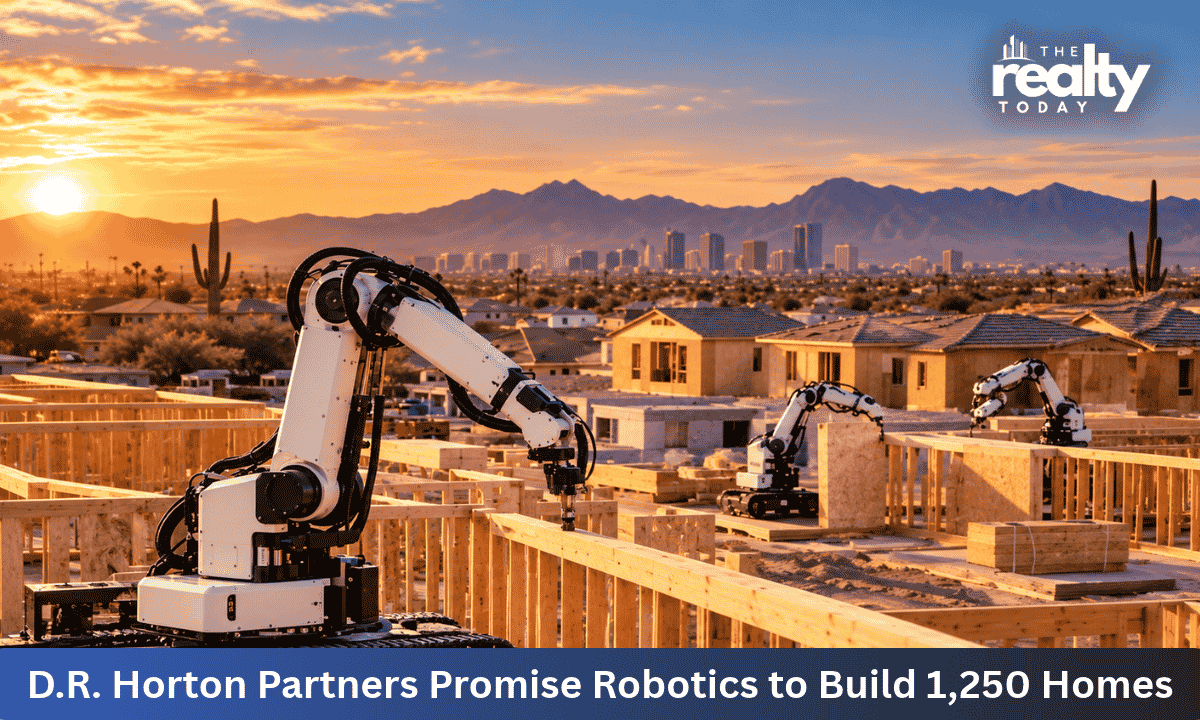
Homebuilder D.R. Horton has entered a multi-year partnership with Canada-based construction tech firm Promise Robotics to use its robotic construction system to build over 1,250 homes. This will help improve efficiency and consistency through the automation of some building processes using a factory based approach.
This partnership, announced on October 13th 2026, will allow D.R. Horton to use the Factory-as-a-Service platform provided by Promise Robotics. This means they can take advantage of the automated manufacturing capability without having to create their own robotics manufacturing facility. Financial details of the deal were not disclosed.
While this partnership comes at a time when there is pressure on homebuilders to control costs and staffing, it remains to be seen if this will provide any cost savings or increase efficiency.
D.R. Horton to Use Robotic Manufacturing for 1,250 Homes
Under the agreement, Promise Robotics will provide production capacity to support more than 1,250 homes. The project is expected to support homes in the Phoenix metropolitan area, where Promise Robotics is planning its first US manufacturing facility. Production is expected to begin in early 2027.
Promise Robotics’ model allows builders to use existing house designs rather than redesigning their projects around a new construction system. Its software converts architectural plans into manufacturing instructions, coordinating the production of building components and their installation at the construction site.
The arrangement marks a commercial step for Promise Robotics as it expands into the US market. For D.R. Horton provides an opportunity to test automated production within its existing homebuilding operations without taking on the cost of setting up a dedicated factory.
The companies have not disclosed the construction schedule for the homes covered by the agreement or identified the specific communities where they will be built.
How Promise Robotics Uses AI to Frame Homes
Using software and robotic technology, Promise Robotics produces structural components for buildings like walls, floors and stairs. They are shipped on-site where expert crews fit the components together. A similar use of robotics in construction is emerging in India, where BARVL has partnered with Europe’s XtreeE to establish a robotic 3D construction printing platform.
Promise Robotics says its system can frame a typical two-storey, 1,800-square-foot house in around eight hours. This covers the framing stage only; plumbing, wiring, inspections and other work are still required before the home is complete. The Factory-as-a-Service model means that builders do not have to invest in machinery and run their own factory. Instead they can utilize the production capacity of Promise Robotics.
This aims to increase the coordination between design, production and assembly. As parts of the process can be completed in a controlled factory environment, Promise Robotics aim to improve the consistency of production and reduce some of the unpredictability of traditional on-site framing.
Can Robotic Framing Help Reduce Construction Costs?
Framing is a labour-intensive stage of homebuilding, and delays can affect the wider construction schedule. Automating parts of the process could help builders manage labour requirements and make the supply of structural components more predictable.
Faster framing may also reduce the time homes spend under construction. This could help limit certain carrying costs and allow builders to manage their project schedules more efficiently. However, savings across the full construction process will depend on how effectively factory production integrates with on-site work and subsequent trades.
The technology will not eliminate the need for construction workers. Crews will still be required to assemble components and complete the remaining stages of building a home. Its potential benefits will depend on whether automation can improve productivity while working alongside existing construction methods.
What this Could Mean for Homebuilding
The agreement reflects growing interest in factory-based construction as builders look for ways to improve efficiency. The agreement gives D.R. Horton access to automated production capacity for a defined group of homes, allowing it to test the system within its existing homebuilding operations.
It is also too early to determine whether the arrangement will lead to lower home prices. Any savings from faster or more consistent framing would need to be weighed against manufacturing, transportation, installation and other construction costs before their effect on final prices could be assessed.
Promise Robotics’ planned Phoenix operation will provide an opportunity to test whether its model can deliver consistent production at a commercial scale. The results could help establish whether factory-based robotic manufacturing can become a practical part of residential construction beyond an initial group of projects.
For now, the agreement is a step towards greater automation in homebuilding, rather than evidence that robots will soon build complete homes or make new housing substantially cheaper.