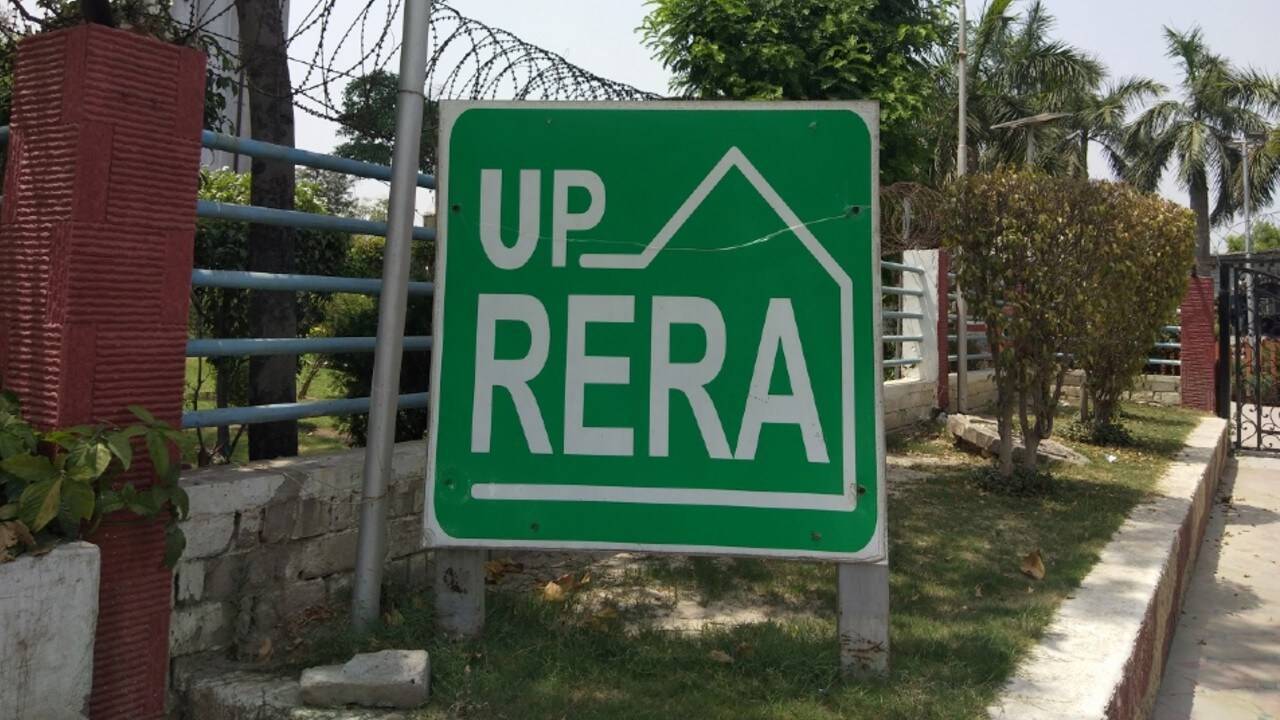

The Haryana Real Estate Regulatory Authority (HRERA) has granted a four-month extension to eligible real estate projects in the state, citing disruptions caused by the ongoing situation in West Asia. The authority has treated the crisis as a force majeure event, pointing to its impact on the availability and movement of construction materials.
The decision follows an advisory issued by MoHUA on July 31, 2026, which asked all state RERAs to grant similar relief. Haryana joins Maharashtra and Telangana, whose regulators have already issued four-month extensions in response to the same advisory.
Key Highlights
• HRERA has granted a four-month extension to eligible real estate projects in Haryana, treating the West Asia crisis as a force majeure event.
• The move follows a July 31, 2026 advisory from the Union Ministry of Housing and Urban Affairs (MoHUA) asking all state RERAs to grant similar relief.
• Only projects registered with HRERA on or before July 31, 2026 qualify; projects registered after that date are not covered.
• The MoHUA advisory applies nationally to projects whose completion date, revised completion date, or extended completion date falls on or after February 28, 2026.
• The extension is based on Section 6 of the RERA Act, after the Finance Ministry classified the West Asia situation as “war” in an Office Memorandum dated April 29, 2026.
• Maharashtra and Telangana RERAs have already issued similar four-month extensions.
• Since land and real estate are state subjects, the advisory is a recommendation, not a binding directive; each state RERA sets its own eligibility rules.
• Force majeure status exempts developers from the compensation they would otherwise owe homebuyers for unjustified delays, a point consumer groups have flagged as a concern.
The MoHUA advisory applies to registered projects whose original, revised, or extended completion date falls on or after February 28, 2026. To avoid procedural delays, the Ministry recommended that state RERAs issue a common order covering all eligible projects rather than requiring developers to file separate applications for each one. Normally, a developer seeking more time on a registered project has to apply individually and make a case for extension; the common-order route was meant to avoid a backlog of such applications and give developers certainty without a case-by-case review.
In Haryana's case, the relief is not available to every project on record. Only projects that were registered with HRERA on or before July 31, 2026 qualify. Projects registered after that date fall outside the scope of the extension.
The extension rests on Section 6 of the Real Estate (Regulation and Development) Act, 2016, which allows regulators to extend a project's registration on force majeure grounds. The Department of Expenditure under the Ministry of Finance had already classified the West Asia situation as “war” in an Office Memorandum dated April 29, 2026, a designation that made it eligible to be treated as force majeure under RERA. MoHUA said the conflict has disrupted global supply chains, driving up freight costs and creating shortages of construction inputs such as steel, aluminium, copper and tiles, making it harder for developers to stick to original construction schedules.
Homebuyer Concerns
Consumer groups have raised concerns about the blanket nature of the extension. Under normal RERA provisions, developers are required to compensate homebuyers for delays that are not justified. A force majeure classification exempts developers from this liability, which means buyers who have already waited beyond their promised possession dates may now have to wait longer, with no compensation for the additional delay.
The advisory itself is not automatically or uniformly binding, since land and real estate fall under state jurisdiction. Each state RERA has to decide independently which projects qualify and how the extension applies within its territory. For Haryana, where a large share of ongoing projects are concentrated in Gurugram and other NCR markets, the additional four months gives developers registered on or before July 31, 2026 room to manage supply-side disruptions without breaching their registered completion timelines. Whether this translates into smoother project delivery or longer waits for buyers will depend on how strictly HRERA applies its eligibility criteria, and whether other states follow with their own orders in the coming weeks.